
3 Steps towards Sustainability and Social Justice in Cannabis
The last two years; combination of climate crisis, COVID-19 and BLM protests around the world makes one thing very clear: environmental sustainability and social justice are linked. The legacy cannabis growers of the Emerald triangle went back to the land decades ago to live an alternative way of life that cared for nature and for each other. From the start, it was about humans and community as much as it was about ecology. Their experience reveals three steps to take, or aspire towards, to commit to sustainable development.
The last two years’ combination of climate crisis, COVID-19 and BLM protests around the world makes one thing very clear: environmental sustainability and social justice are linked. “The overall problem is that we are not sustainable in the ways we are living and producing on the planet today,” said Lise Kingo, the executive director of the UN Global Compact..
The legacy cannabis growers of the Emerald triangle went back to the land decades ago to live an alternative way of life that cared for nature and for each other. From the start, it was about humans and community as much as it was about ecology. Their experience reveals three steps to take, or aspire towards, to commit to sustainable development.

The frameworks for this are the United Nations Sustainable Development Goals (SDGs) and the Sun+Earth 3 pillars, because, while there are others with outstanding environmental standards, these two put social justice at the center of their sustainability.
In 2015, the United nations adopted the 17 global Sustainable Development Goals (SDGs) with the objective to transform the world. “Sustainability is a good concept to approach all of life,” explains Kenzi Riboulet-Zemouli, a researcher who’s been providing recommendations to the WHO and United Nations for the last 5 years. “It’s essential to protect small farmers and the knowledge that’s been passed through generations.”
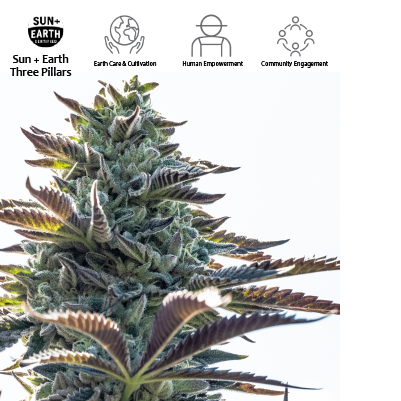
The Sun+Earth certification was developed “as a resistance against industrial agriculture taking the cannabis space,” explains co-founder Andrew Black. “The essence is to keep legacy, artisanal, organic farmers farming.”
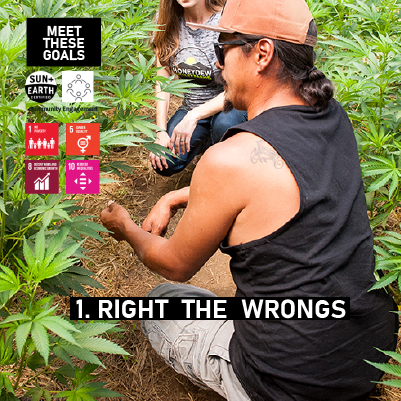
1. Right the wrongs
People of color and women have been disproportionally targeted by penalties and incarceration in the war on drugs, yet women are represented at higher percentage in cannabis than in other industries. Buy from black-owned and women-owned businesses--see the database by Cannaclusive [https://www.cannaclusive.com/inclusivebase]. And get engaged with The Last Prisoner Project [https://www.lastprisonerproject.org/] that aims to bring restorative justice to the cannabis industry. (SDG Goal #1 No Poverty, Goal #5 Gender Equality, Goal #8 Decent Work, Goal #10 Reduced Inequalities. Sun+Earth Community Engagement.)
2. Give to compassionate care
The health benefits of cannabis are increasingly recognized at the scientific level. But already back in 1996, Joe Airone started Sweetleaf Collective to provide plant-based medicine to terminally ill cancer and HIV/AIDS patients in the Bay Area. Donate to non-profits like Sweetleaf Collective and others. In Humboldt, growers have been cultivating medicine for decades, and helping those in pain. And the HPRC dispensary has a nurse on staff that can help educate about safe medical options. (SDG Goal #3 Good Health & WellBeing. Sun+Earth Human Empowerment).
3. Choose sun-grown
There is a place for indoor cultivation, but in the long-term, sun-grown cannabis is the right environmental choice. And small-batch sungrown cannabis is an intense expression of the terroir, so it will increasingly fetch a premium. Moving away from resource-extracting artificial light production is also the right social justice choice. Globally, people of color are on the front line of the climate crisis, so our decisions in production and consumption have an impact. (SDG Goal #7 Affordable Clean Energy, Goal #13 Climate Action, Goal #14 Life below Water, Goal #15 Life on Land. Sun+Earth Earth Care & Cultivation).
Rising to the challenge of sustainable development may seem overwhelming, but there are steps we can take immediately, individually and collectively. Buying from black-owned and woman-owned businesses helps rebalance inequalities; donating towards compassionate care reconnects cannabis as medicine; and preferring sun-grown products protects both local small farms and global minorities. Whether you’re a farmer or a consumer, it’s possible to start with these three conscious choices, and support each other’s journey into full sustainability.
##
Nicole Riggs is the founder of Manifesto Synergies, an agency providing brand strategies to woman-owned businesses and nonprofits in the cannabis industry. She sits on the board of the Humboldt Community Business Development Center (HCBDC) and is an Affiliate Researcher with the Center for the Study of Cannabis and Social Policy (CASP).
Does the Market Impact Terroir?
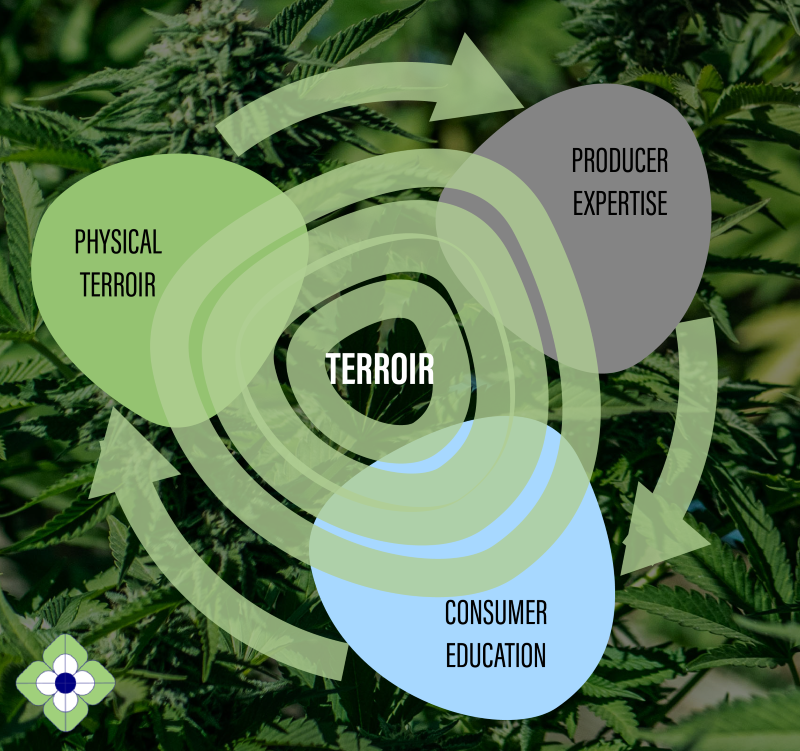
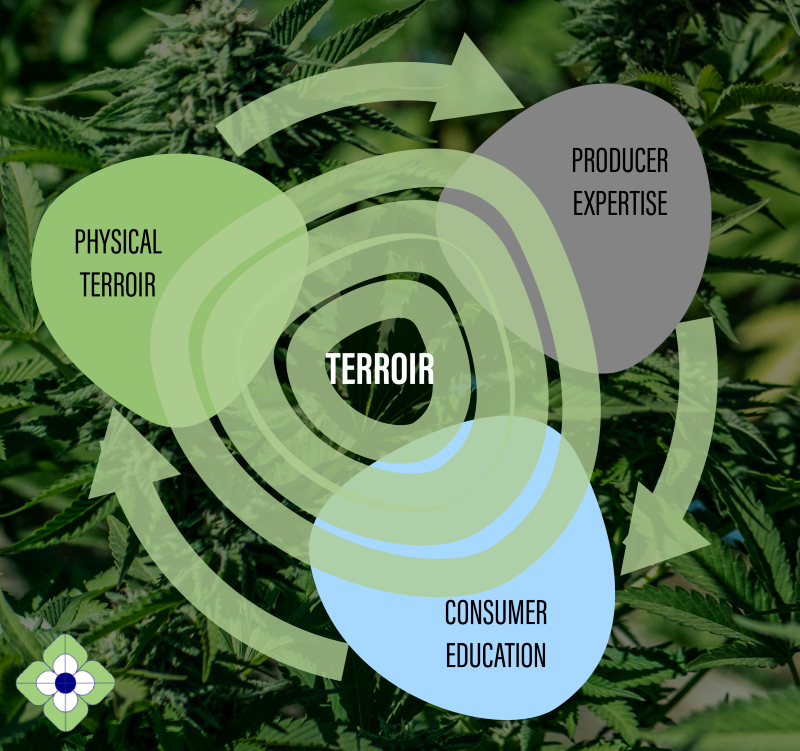
When you’re looking at cannabis appellations, you’ll sometimes hear that the quality of the flower comes almost magically out of the soil in which it’s grown. That would suggest that the physical terroir, the soil, is the one factor that defines quality. But I would argue that farmer expertise and consumer education are equally important.
When you’re looking into cannabis appellations, you’ll sometimes hear that the quality of cannabis appears almost magically out of the soil in which it grows. That would suggest that the physical terroir, the soil, is the factor that defines your flower quality.
But I would argue that while yes, good cannabis is 100% physical terroir, it’s also 100% human talent (yeah, math was never my strong suit). By that I mean that it takes the talent of a producer and the talented of an educated consumer to REVEAL the terroir.
Look at Champagne: they’ve been making wine there since the middle ages. In the 17th century they developed the technique of bottling the wine before the initial fermentation had ended, and then sugar was added to create a secondary fermentation. At the same time, the English glass-makers discovered a technique to produce bottles able to withstand the internal pressure of a secondary fermentation; the Portuguese produced cork; and sulfite was developed, which helped preserve wine whose fermentation was not completed. Bubbles (or gas) in wine was considered a flaw. But in the late 17th century the English high society took to it and it grew exponentially in popularity. So champagne was born.
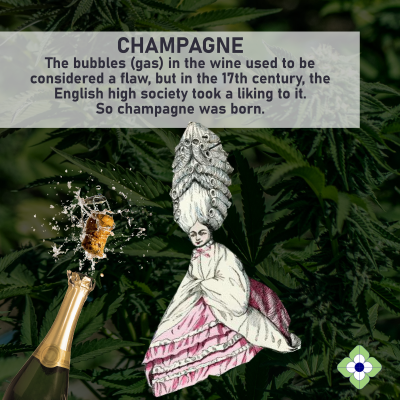
Apply that perspective to cannabis and it makes sense that consumer preferences impact what strains are grown, how they’re cultivated, and how well-oiled the supply chain is. The human element in terroir is the consumer and also, of course, the farmer. There’s a huge variety of soils and micro-climates within Humboldt.
Without consumers, you might be able to grow the best weed in the world but you’ll do it only once because you’ll have nowhere to sell it. It’s like a great concert: you need a Steinway piano, and you also need a great score, a talented musician, and an audience that vibrates to the music and inspires the musician to crush it.
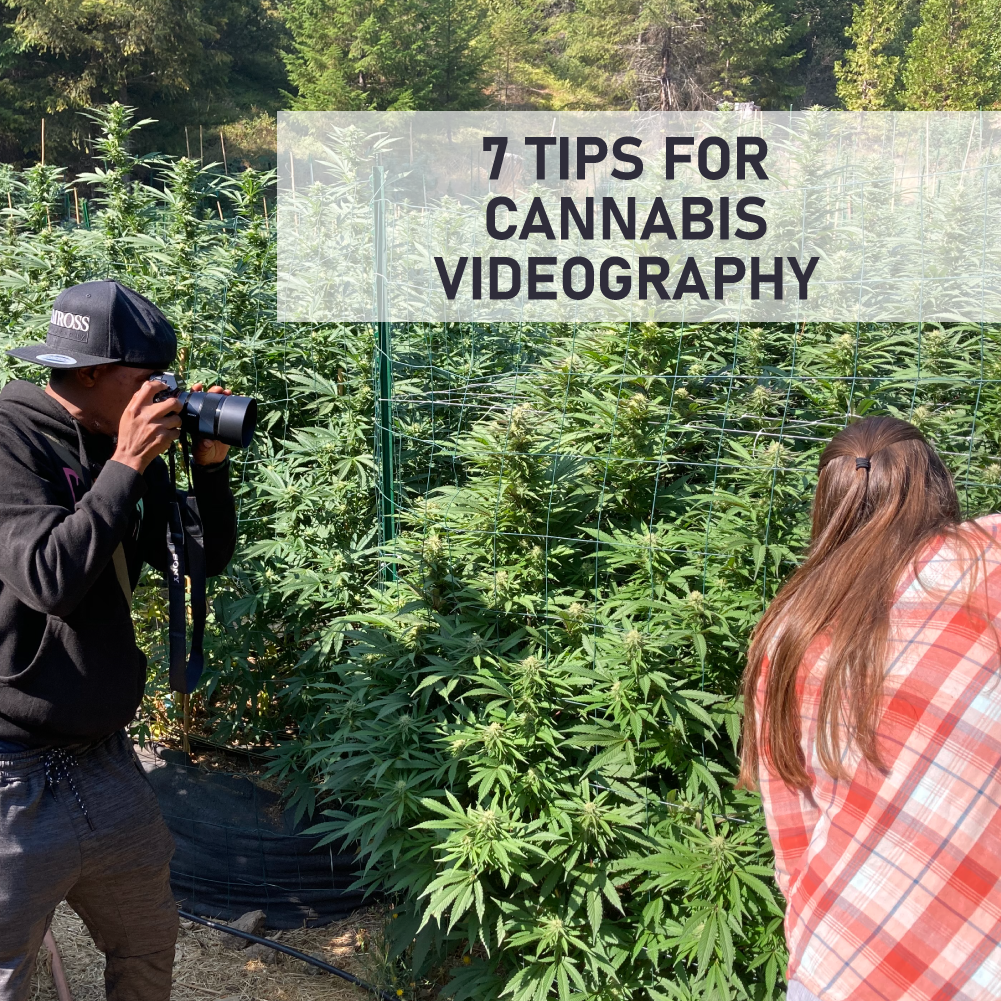
7 Tips for Cannabis Videography
You've decided to invest in a 4-minute video that introduces your brand, your farm, your product. You're choosing a videographer and you're starting to plan. Here are 7 tips to help you prepare your video shoot.
You've decided to invest in a 4-minute video that introduces your brand, your farm, your product. You're choosing a videographer and you're starting to plan. Here are 7 tips to help you prepare your video shoot.
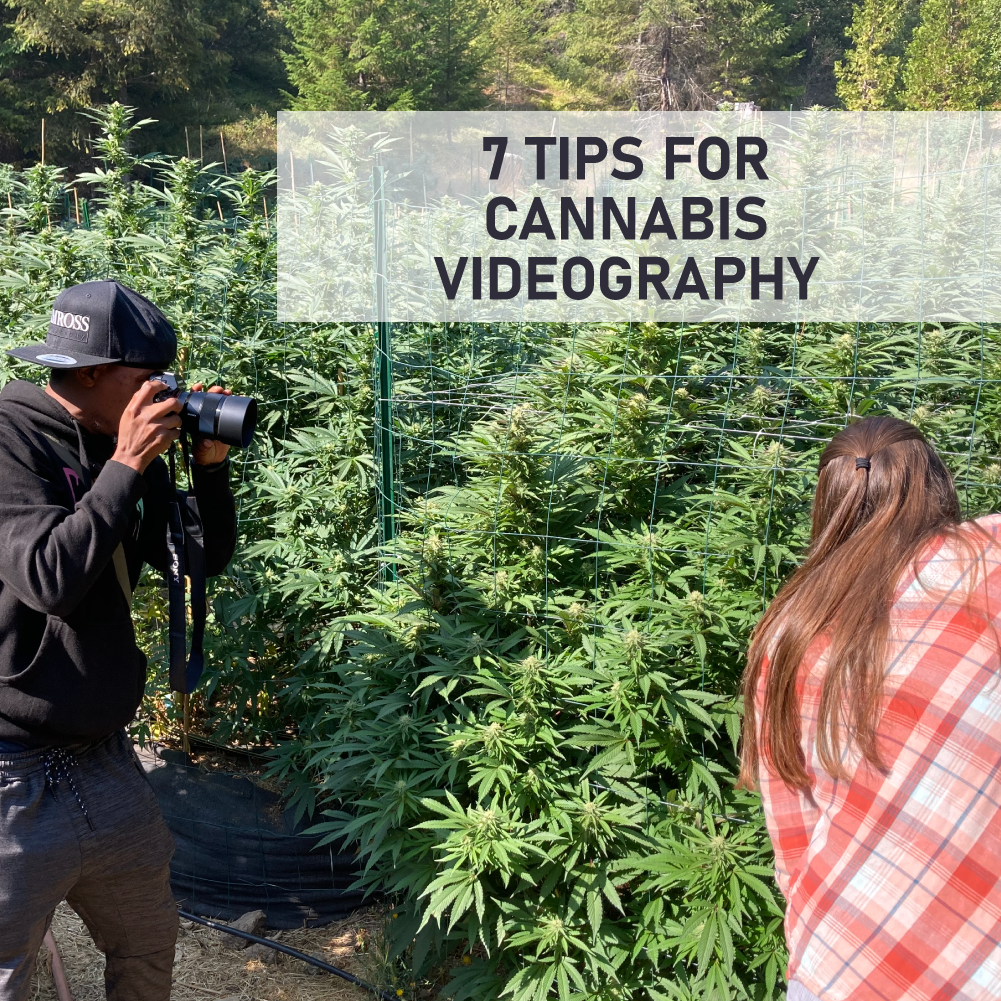
Videographer Kevin Ross with Linsey Jones at her farm, Aloha Humboldt
1. Choose your time
It’s ideal to shoot footage of the farm when the plants are more mature. There is also more activity on the farm in the summer months to film for b-roll. In terms of the time of day, it’s good to break up the shoot into 2 different parts: interviews (people talking on camera) and b-roll (footage of the farm and people doing things).
Interviews are best shot indoors so we have clean audio. But if the farm looks nice in the background and filming indoors is not possible (due to Covid-19) then filming the interview portion outdoors is fine -- ideally in the morning hours around 9am. For b-roll this can be filmed throughout the day. The videographer will need someone to guide them through the farm that day and point out the things that ideally they want to showcase on the video. It’s always good to film the interviews first so that the videographer can have a list of shots for b-roll that needs to be filmed the following day.
For manufacturing operations inside like packaging: this can be done during normal business hours. The facility manager should notify all workers on site to make sure they are OK with being filmed. Now with Covid-19 everyone is masked so it can be less of an issue if people want to hide there identity, but always good to know who does not want to be in the video so that they're not in the frame.
2. Don’t wear line patterns
For interviews: don’t wear small line patterns. Ideally no hats. No super bright neon colors. Some people are naturals at speaking on camera, others less so. Ideally, your operation has 3-4 people to be interviewed, and the videographer will mix the answers for the final video. For people working on the farm, harvesting, watering, etc, keep carrying on, the videographer is like a fly on the wall capturing the work. Just be relaxed and respond in a cool, calm manner.
3. Should anyone not be filmed?
If anyone isn’t OK to be on camera, let the videographer know before they start filming.
4. Don’t pre-write your answers
Work with the videographer to have a list of questions prior to the filming, so that you can practice your answers. But DO NOT WRITE OUT answers prior to filming. Let them come from the heart and don’t overthink it. Bullet point notes are fine to remember topics to discuss.
5. How long does it all take?
(i) Pre-planning can take a few weeks. For a June shoot, start planning in April-May.
(ii) Filming typically takes 4 days: -1 Day filming 3-4 people for all the interviews -2 Days of filming the farm -1 Day filming any other b roll of products or other shots/interviews that were missed
(iii) Post production takes 1-3 Weeks depending on how fast the client gives feedback. Satva Leung, who's done multiple videos for Talking Trees, uses Frame.io for taking in notes from the client. It’s a great way to review the video and gather feedback remotely.
6. What about music?
The videographer should have a library of music that is cleared for usage. Instrumental tracks work better in the case where we will hear people talking on camera.
7. Shoot the experience!
Don’t forget to shoot the consumption side, or to have ready footage of consumption to give to the videographer. You want to always connect with your consumers, so make sure you film the experience.
This article is co-written with videographer Satva Leung. Satva grew up in Trinidad and Arcata. He now lives in San Francisco but returns to Humboldt to be surrounded by nature and to film content for the cannabis industry. See one of his videos for Talking Trees here.
How to pair wine and Humboldt cannabis
There are two glasses in front of you. One is filled with wine,the other with cannabis flower from Humboldt, the world’s mecca for pot. You smell each, and the aromas envelop you in a harmonious pairing. You’re enticed by the promise of flavors, textures and taste intensities. If you want to appreciate a cannabis and wine pairing, follow these steps.
There are two glasses in front of you. One is filled with wine, the other with cannabis flower from Humboldt, the world’s mecca for top-tier pot. You smell each, and the aromas envelop you in a harmonious pairing. You’re enticed by the promise of flavors, textures and taste intensities. If you want to appreciate a pairing of wine and Humboldt cannabis, follow these steps.
1. Know what your intention is. “Seek balance,” says Jamie Evans of The Herb Somm, a cannabis blog and lifestyle brand that focuses on the gourmet side of the cannabis industry. A lighter cannabis strain with uplifting effects, say Lemon Sour Diesel, will be served with a refreshing white wine like a Sauvignon Blanc, Chardonnary, or Albariño. However, if you aim for deep relaxation, pair the more earthy flavors of a calming cannabis strain such as White Tahoe Cookies with a well-structured and savoury wine like a Cabernet.
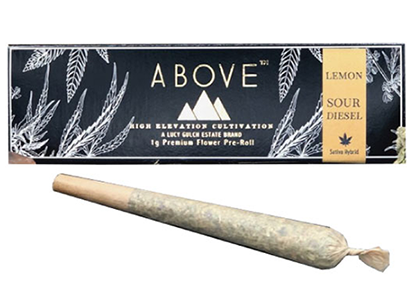
Lemon Sour Diesel by Above, Humboldt County
2. Learn about aromas. If you’re new to cannabis, study terpenes--more than 100 vibrant aromatic compounds found in cannabis--and focus on the dominant terpene of a cannabis strain, which is often Myrcene, Limonene, or Pinene. Once you’ve developed a palate and you start to know what you like, learn about the minor terpenes of the strain as well, because they play a subtle and important role. “The terpene complexity of cannabis is unparalleled,” says Kevin Jodrey, one of Humboldt County (and the world)’s finest cultivation experts. A good resource for terpene education is SC Labs . And if you’re new to wine, explore (at such sites as Wine Folly) the different varietals grown in different regions and see what speaks to you.
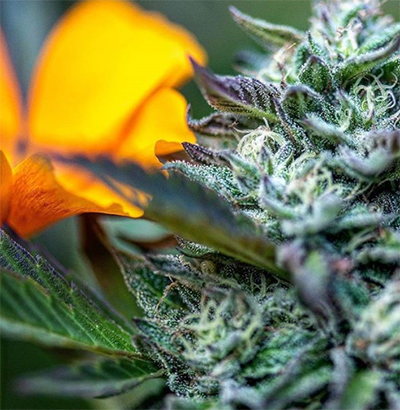
White Tahoe Cookies by Aloha Humboldt
3. Explore textures. A good wine will have a pleasant entry into the palate, and a long finish. Cannabis has smoke texture too, as well as tannins due to temperature swings between day and night on the farm where it grows. Notice the weight of the wine and the cannabis as you taste them. “It’s all about the extended finish,” says Sunshine Johnston, a legacy cannabis farmer in Humboldt County with years of experience as a wine broker. She runs Sunboldt Grown Farm (all her cannabis grows in native soil, under the sun). As for Kevin, his taste runs to “a heavier, fuller cannabis that envelops me, that grabs me, and in wine, a fuller-body red with deep complexities when it bites in my mouth. I like developed richness.”
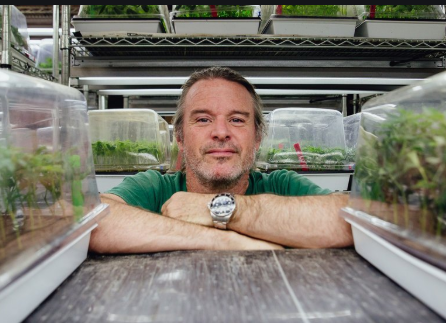
Kevin Jodrey, Humboldt County
4. Go wild. Pleasure comes from pairing wine made with as little manipulation as possible, like the natural wines that are now exploding in popularity in France, with cannabis that is cultivated with the least amount of human interference. The best winemakers don’t get in the way of the grape expressing the terroir, and the best cannabis farmers don’t inhibit the plant’s full expression of its terroir. Humboldt County is blessed by nature with diverse fertile soils, a moderate climate and intense rainfall. Humboldt cannabis farmers foster soil vitality through regenerative practices, which yields the extraordinary top-shelf cannabis that everyone wants. One of the strains at Sunshine’s farm is Wanderlust, exhibiting creamy, lemony flavors, almost like rotten oranges, which she loves to pair with a rich, mineral Chardonnay from Briceland Vineyards. For Sunshine, it’s “a sensory experience, you’re trying to build resonance.”
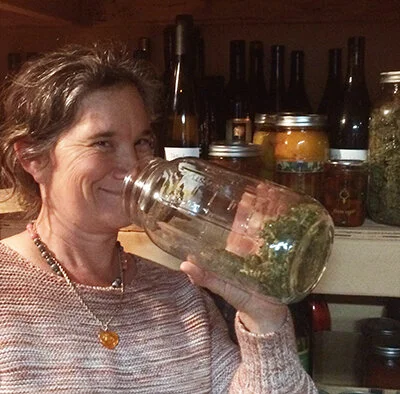
Sunshine Johnston, Sunboldt Grown, Humboldt County
5. Start low, go slow. Jamie advises a slow, gradual tasting and a glass of water always by your side. With wine, you can swirl it in the glass, smell it, take a small sip, and if you don’t like it, spit it out. Not so with cannabis. To make the pleasure last, don’t just consume cannabis to get high right away, but consider alternating smoking with eating raw cannabis-infused foods that reveal the rich flavors without the high. “When you eat raw cannabis-infused food, you feel good!” says Sunshine. When smoking, Jamie favors a dry flower vaporizer to enjoy the pure terpene profile while keeping the palate clean for other flavors.
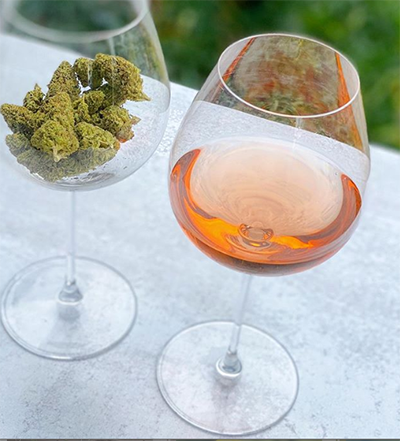
Jamie Evans, The Herb Somm
6. Host a private party at home. Due to regulatory limitations, cannabis and wine pairing are best enjoyed as private events in an intimate, private home. If you have the resources, bring in both a ganjier whose passion and expertise are all about cannabis, and a sommelier obsessed with all things wine. Develop an appreciation of each on its own terms, and play with their union. Ultimately, if you enjoyed the pairing, then it was a good pairing!
Cheers!
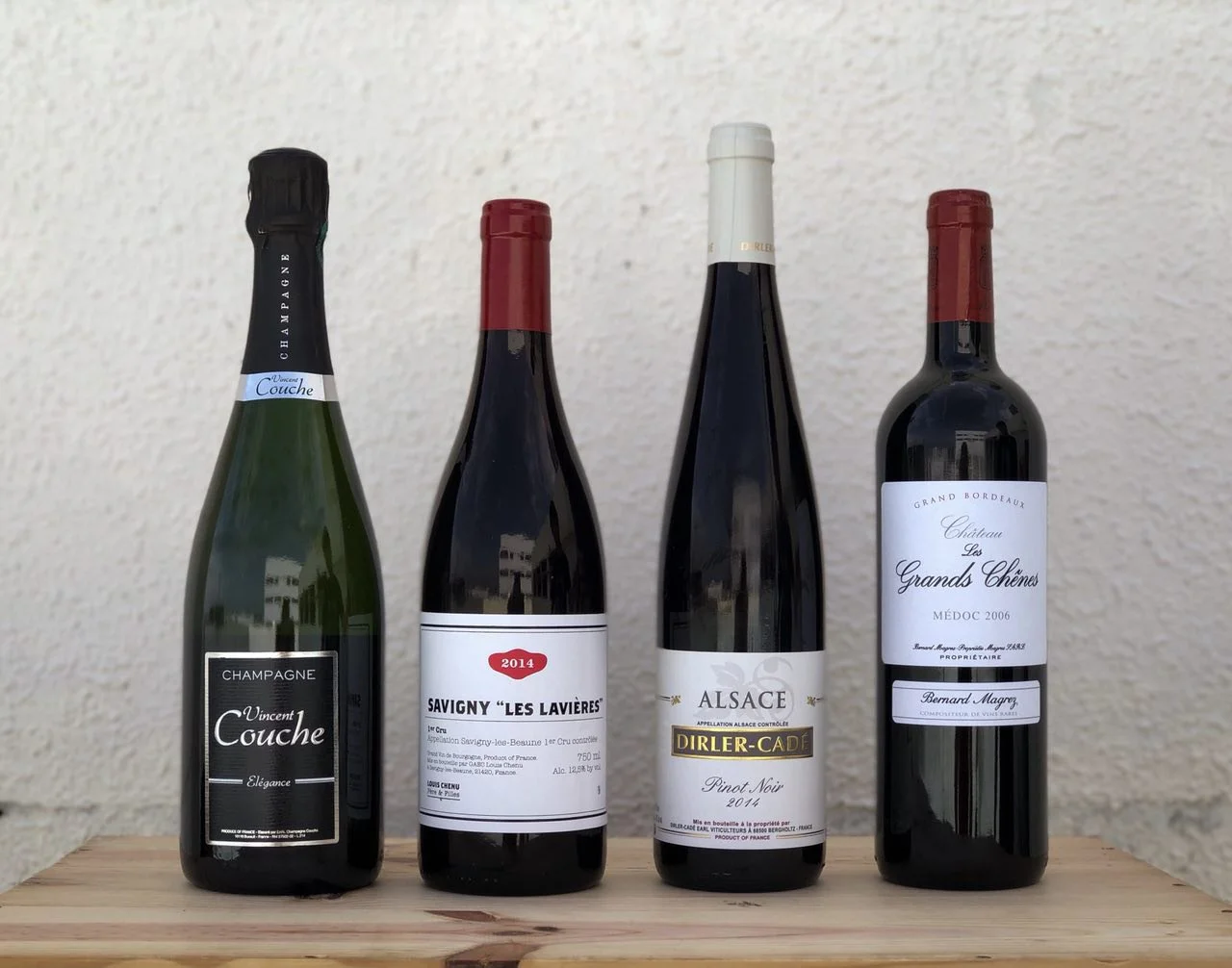
Humboldt Cannabis Appellations: Packaging Differentiation
Humboldt Cannabis Appellations: Packaging Differentiation
Much focus is given to French wine appellations when developing a framework for California Cannabis Appellations. French wines come in different shape bottles. Although the bottle shape doesn’t impact the wine’s flavor, it is a powerful identifier of the region from where the wine is produced. The Alsace wine bottle is long and fluted, the Bordeaux bottle is straight and tall. Burgundy presents itself in a bottle with gently sloping shoulders and a slightly wider body.
Humboldt County may find it valuable to consider a required packaging for its flower products that sets it apart from cannabis produced outside the Humboldt County Appellation. The packaging would reflects the environmental consciousness that has long existed in the region, and therefore be made without plastic but with a sustainable material. In addition, the packaging should ensure the longevity of the superior product.
What are your ideas about packaging for Humboldt Cannabis products?
Humboldt Cannabis Appellations: Lieux-dits
Humboldt Cannabis Appellations could use locales (lieux-dits).
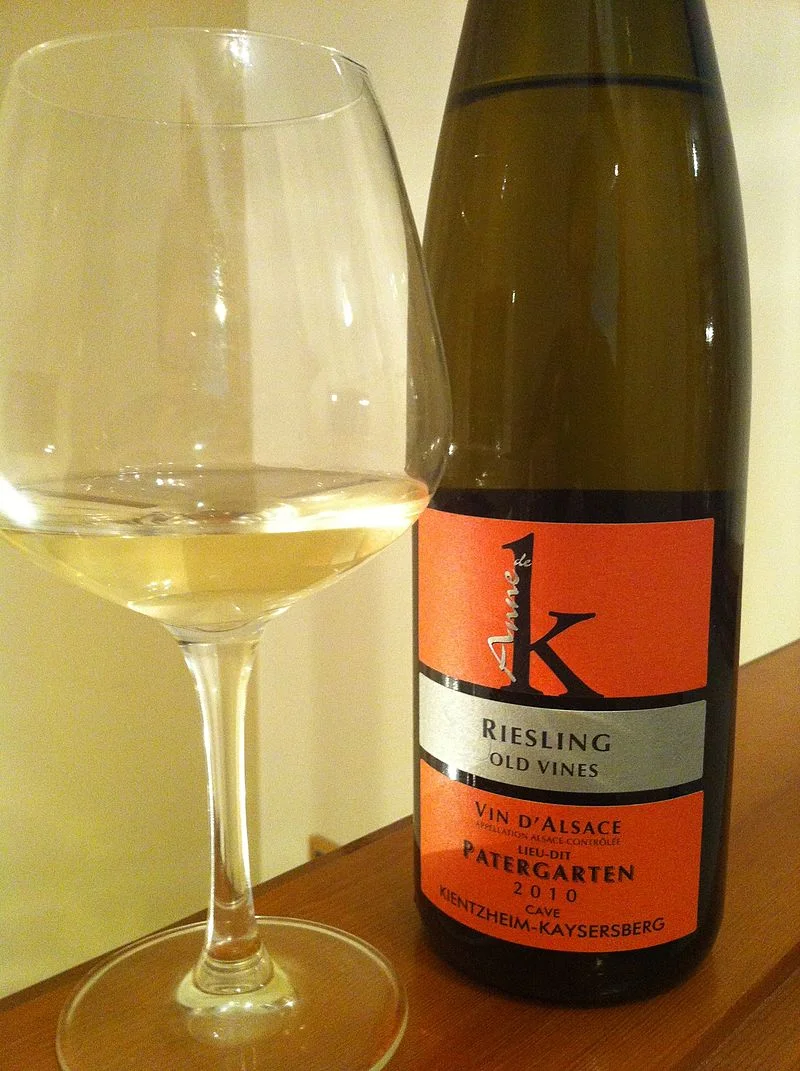
As of May 2019, there are over 1300 licensed cannabis cultivators in Humboldt County. The cultivators are spread across the forested, mountainous terrain of the county and speak to the tradition of cannabis growing in the various micro-climates of the region. An Appellation system that values unique micro-climate locations is more likely to benefit the long-term sustainability of small-scale cannabis farmers in Humboldt. Turning to Alsace, there are three Appellations and long a rich, long history of ‘lieu-dit’ (locales), with over 50 lieux-dits in its AOC. As an alternative to Mendocino’s system of multiple Appellations based on geography, further research into a single HC Appellation with a multiplicity of lieux-dits may prove fruitful in the establishment of Humboldt Cannabis Appellation guidelines.
Lieux-dits (pronounced liuh dee) is a French toponymic term for a smaller geographical area within the Appellation. Three possible translations for a Humboldt Cannabis lieu-dit are ‘townland’ locale’ and ‘place-name.’
What do you think of establishing ‘lieux-dits’ within the Humboldt Cannabis Appellation?