Does the Market Impact Terroir?
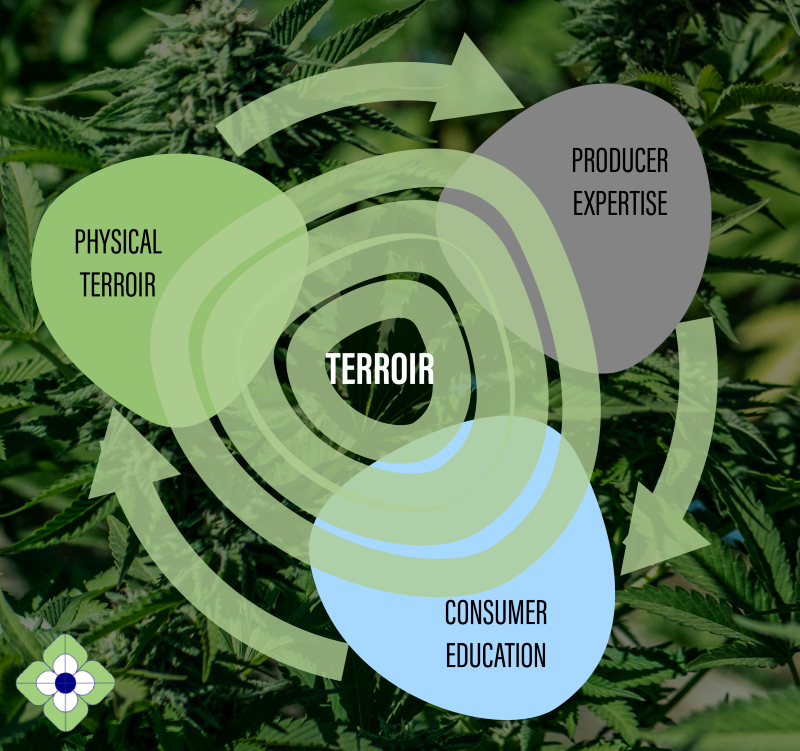
When you’re looking into cannabis appellations, you’ll sometimes hear that the quality of cannabis appears almost magically out of the soil in which it grows. That would suggest that the physical terroir, the soil, is the factor that defines your flower quality.
But I would argue that while yes, good cannabis is 100% physical terroir, it’s also 100% human talent (yeah, math was never my strong suit). By that I mean that it takes the talent of a producer and the talented of an educated consumer to REVEAL the terroir.
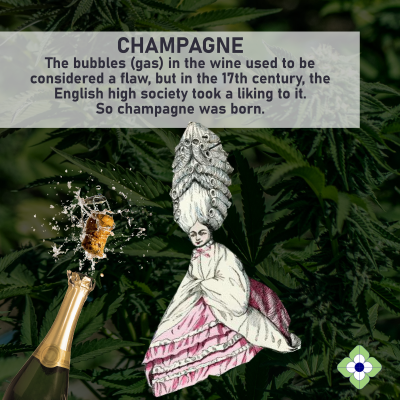
Look at Champagne: they’ve been making wine there since the middle ages. In the 17th century they developed the technique of bottling the wine before the initial fermentation had ended, and then sugar was added to create a secondary fermentation. At the same time, the English glass-makers discovered a technique to produce bottles able to withstand the internal pressure of a secondary fermentation; the Portuguese produced cork; and sulfite was developed, which helped preserve wine whose fermentation was not completed. Bubbles (or gas) in wine was considered a flaw. But in the late 17th century the English high society took to it and it grew exponentially in popularity. So champagne was born.
Apply that perspective to cannabis and it makes sense that consumer preferences impact what strains are grown, how they’re cultivated, and how well-oiled the supply chain is. The human element in terroir is the consumer and also, of course, the farmer. There’s a huge variety of soils and micro-climates within Humboldt.
Without consumers, you might be able to grow the best weed in the world but you’ll do it only once because you’ll have nowhere to sell it. It’s like a great concert: you need a Steinway piano, and you also need a great score, a talented musician, and an audience that vibrates to the music and inspires the musician to crush it.