

3 Steps towards Sustainability and Social Justice in Cannabis
The last two years; combination of climate crisis, COVID-19 and BLM protests around the world makes one thing very clear: environmental sustainability and social justice are linked. The legacy cannabis growers of the Emerald triangle went back to the land decades ago to live an alternative way of life that cared for nature and for each other. From the start, it was about humans and community as much as it was about ecology. Their experience reveals three steps to take, or aspire towards, to commit to sustainable development.

The last two years’ combination of climate crisis, COVID-19 and BLM protests around the world makes one thing very clear: environmental sustainability and social justice are linked. “The overall problem is that we are not sustainable in the ways we are living and producing on the planet today,” said Lise Kingo, the executive director of the UN Global Compact..
The legacy cannabis growers of the Emerald triangle went back to the land decades ago to live an alternative way of life that cared for nature and for each other. From the start, it was about humans and community as much as it was about ecology. Their experience reveals three steps to take, or aspire towards, to commit to sustainable development.

The frameworks for this are the United Nations Sustainable Development Goals (SDGs) and the Sun+Earth 3 pillars, because, while there are others with outstanding environmental standards, these two put social justice at the center of their sustainability.
In 2015, the United nations adopted the 17 global Sustainable Development Goals (SDGs) with the objective to transform the world. “Sustainability is a good concept to approach all of life,” explains Kenzi Riboulet-Zemouli, a researcher who’s been providing recommendations to the WHO and United Nations for the last 5 years. “It’s essential to protect small farmers and the knowledge that’s been passed through generations.”
The Sun+Earth certification was developed “as a resistance against industrial agriculture taking the cannabis space,” explains co-founder Andrew Black. “The essence is to keep legacy, artisanal, organic farmers farming.”

1. Right the wrongs
People of color and women have been disproportionally targeted by penalties and incarceration in the war on drugs, yet women are represented at higher percentage in cannabis than in other industries. Buy from black-owned and women-owned businesses--see the database by Cannaclusive [https://www.cannaclusive.com/inclusivebase]. And get engaged with The Last Prisoner Project [https://www.lastprisonerproject.org/] that aims to bring restorative justice to the cannabis industry. (SDG Goal #1 No Poverty, Goal #5 Gender Equality, Goal #8 Decent Work, Goal #10 Reduced Inequalities. Sun+Earth Community Engagement.)

2. Give to compassionate care
The health benefits of cannabis are increasingly recognized at the scientific level. But already back in 1996, Joe Airone started Sweetleaf Collective to provide plant-based medicine to terminally ill cancer and HIV/AIDS patients in the Bay Area. Donate to non-profits like Sweetleaf Collective and others. In Humboldt, growers have been cultivating medicine for decades, and helping those in pain. And the HPRC dispensary has a nurse on staff that can help educate about safe medical options. (SDG Goal #3 Good Health & WellBeing. Sun+Earth Human Empowerment).

3. Choose sun-grown
There is a place for indoor cultivation, but in the long-term, sun-grown cannabis is the right environmental choice. And small-batch sungrown cannabis is an intense expression of the terroir, so it will increasingly fetch a premium. Moving away from resource-extracting artificial light production is also the right social justice choice. Globally, people of color are on the front line of the climate crisis, so our decisions in production and consumption have an impact. (SDG Goal #7 Affordable Clean Energy, Goal #13 Climate Action, Goal #14 Life below Water, Goal #15 Life on Land. Sun+Earth Earth Care & Cultivation).
Rising to the challenge of sustainable development may seem overwhelming, but there are steps we can take immediately, individually and collectively. Buying from black-owned and woman-owned businesses helps rebalance inequalities; donating towards compassionate care reconnects cannabis as medicine; and preferring sun-grown products protects both local small farms and global minorities. Whether you’re a farmer or a consumer, it’s possible to start with these three conscious choices, and support each other’s journey into full sustainability.
##
Nicole Riggs is the founder of Manifesto Synergies, an agency providing brand strategies to woman-owned businesses and nonprofits in the cannabis industry. She sits on the board of the Humboldt Community Business Development Center (HCBDC) and is an Affiliate Researcher with the Center for the Study of Cannabis and Social Policy (CASP).
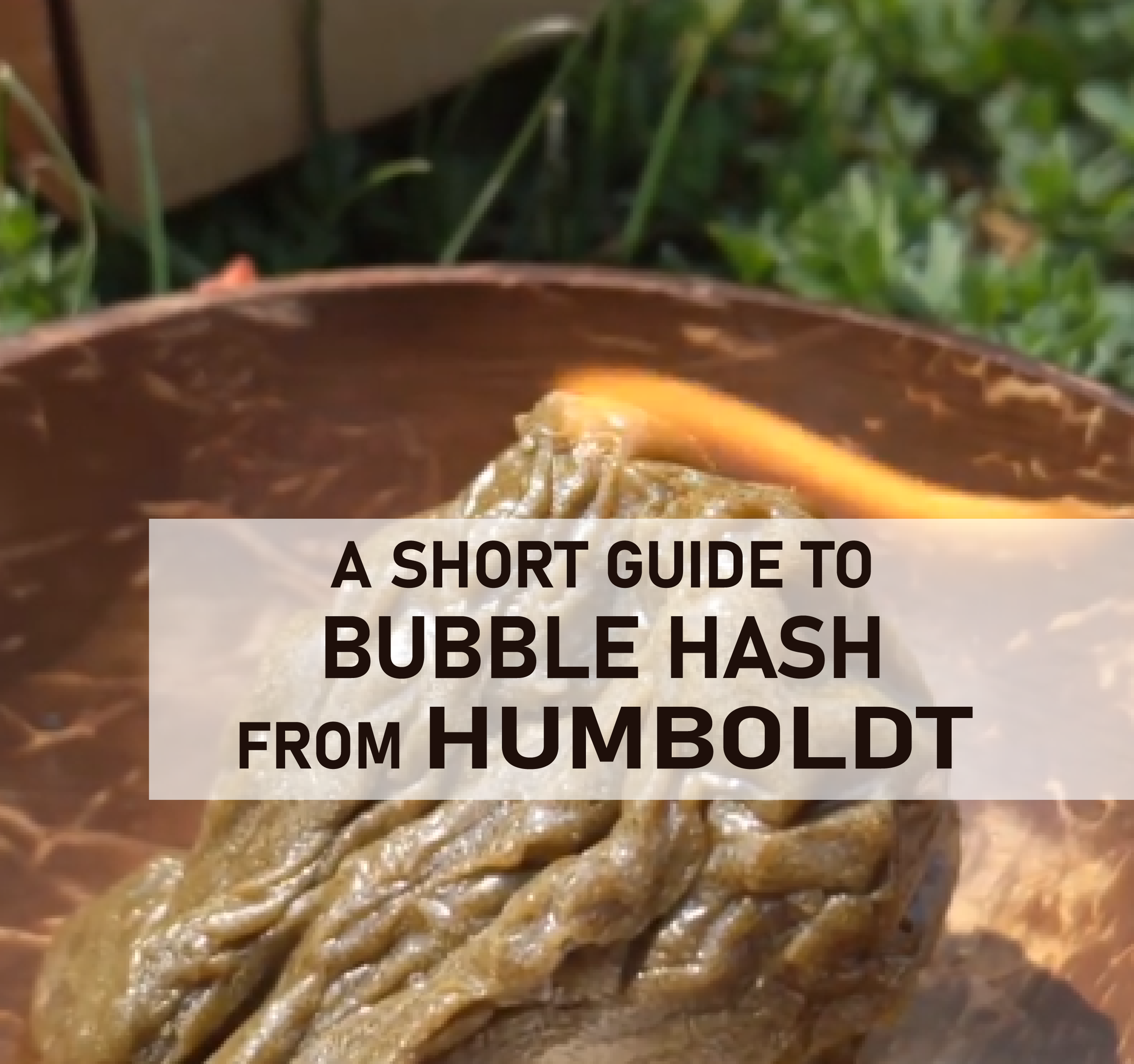
A short guide to bubble hash from Humboldt
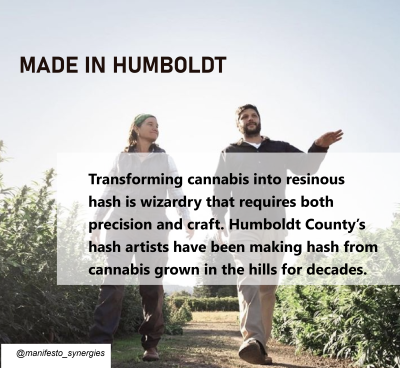
“The secret of hashish lifts up the spirit,”wrote the Syrian poet al-Is-Irdi in the middle of the 13th century. But transforming the plant into resinous hash is wizardry that requires both precision and craft. Humboldt County’s hash artists have been making hash from cannabis grown in the hills for decades.
“The secret of hashish lifts up the spirit,”wrote the Syrian poet al-Is-Irdi in the middle of the 13th century. But transforming the plant into resinous hash is wizardry that requires both precision and craft. Humboldt County’s hash artists have been making hash from cannabis grown in the hills for decades. Bubble hash is most exquisite when crafted from plants that are allowed to fully ripen and yield extraordinary resin. “Bubble hash shows off the farmer the best,” says cannabis farmer Sunshine Johnston of Sunboldt Grown.
Barron Lutz, Nasha Extracts with Sunshine Johnston, Sunboldt Grown, Humboldt County
The concept of bubble hash is simple: Plant material is placed in a container filled with water, ice, and mesh sieves. Through agitation (stirring), the heads of the tiny trichomes (the famous resin glands) become brittle and fall off the stalks. Once the material has been agitated and the trichomes have separated, incremental strainings with mesh sieves ranging from 40 to 120 microns yield different grades of hash.
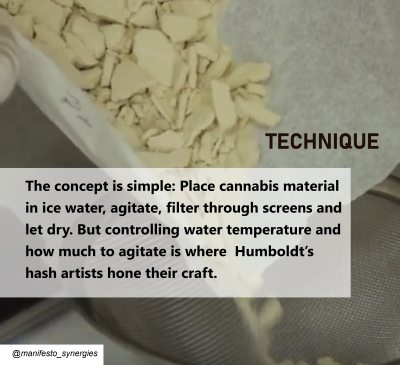
Photo credit: Talking Trees, Humboldt County
Barron Lutz moved to Humboldt County in 2006 specifically to make hash. “I need to be close to where the plants grow and understand the seasons. I was in the food and wine world before, I know how important it is to source local ingredients,” he explains. Barron sources cannabis from local Humboldt county farmers, and today his company Nasha Extracts is California’s biggest hash producer. Choosing the right strain is key. “The best strains for hash produce trichomes that are dry and oily,” says Barron. “By dry, I mean the trichome heads fall off easily. By oily, I mean there’s high oil content in the heads.”
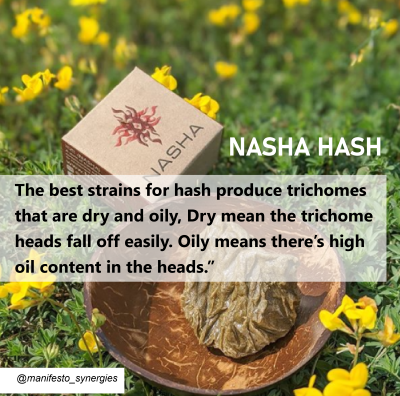
Nasha Extracts, Humboldt County
Craig Nejedly makes hash from the cannabis grown on his farm Talking Trees farms (he also owns High Grade distribution and the Satori Wellness dispensary). For Craig, Humboldt is the best place to cultivate and make hash because of the culture and because of a supportive local government. Being able to control the process from cultivation to final product in the store enables him “to keep the integrity all the way down the line,” he explains.
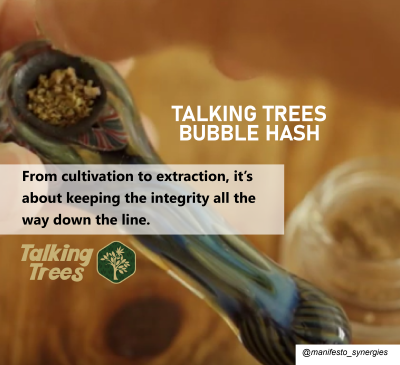
Talking Trees Bubble Hash, Humboldt County
Kiskanu is a vertically-integrated cannabis producer run by husband-and-wife team Jason and Gretchen Miller. In addition to their famous line of skincare products, Kiskanu also produces hash-infused pre-rolls, or as Jason calls them, “the Friday night joint.” As cultivators and extractors, they mix and match their flower strain with the strain used for hash. Jason likes Bubble Gum for hash making, as well as newer strains like GMO, Wedding Cake or Ice Cream Cake for their amazing terpene profiles. Because each person’s endocannabinoid system reacts differently to cannabis, it appears to be terpenes, more so than THC, that impact the experience. “It’s a personalized answer,” says Jason. “This plant doesn’t fit in a box.”
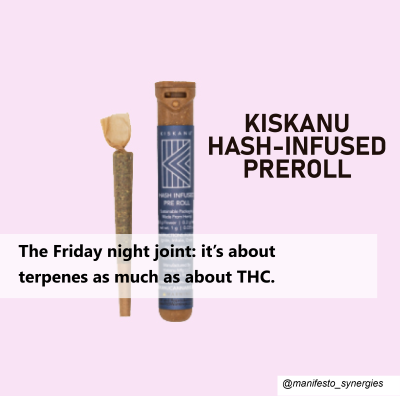
Kiskanu, Humboldt County
Erin Hamilton and her Husband Josh Vert own Royal Key and Suprize Suprize in Arcata which has placed first in the last two Emerald Cups. When I visited their facility, hash artists Sean and Bryce were taking out a tray of hash from the freeze dryer. The trays of hash are placed in the icy-cold dryer to remove the water that was used to extract the trichome heads from the freshly frozen flowers. From there, the collected trichome heads are separated by size then placed in fine mesh bags to be skillfully pressed between large metal plates. The warm plates and precise pressure cause the trichomes membrane to melt, releasing the cannabinoids, terpenes, and forcing them through the fine mesh bag which in turn filters the membrane skin and other undesirables leaving the purest form: Live Rosin. Each batch is unique and Bryce loves the crafting. "It's about how wet and melty it's going to be," he says.
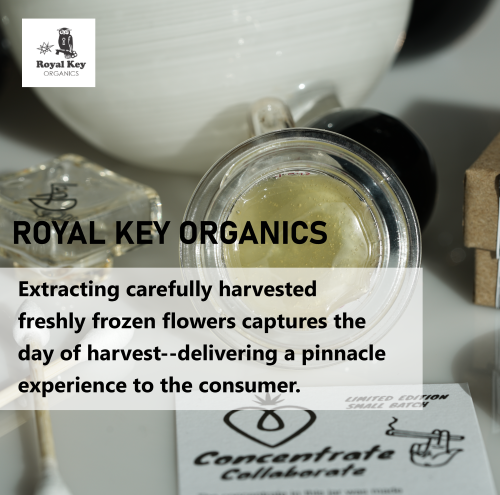
Royal Key Organics, Humboldt County
Go to a licensed dispensary, ask for hash from Humboldt and let your spirits be lifted.
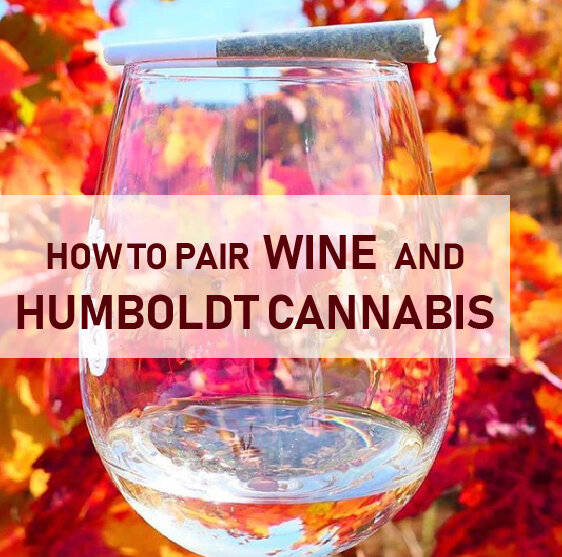
How to pair wine and Humboldt cannabis
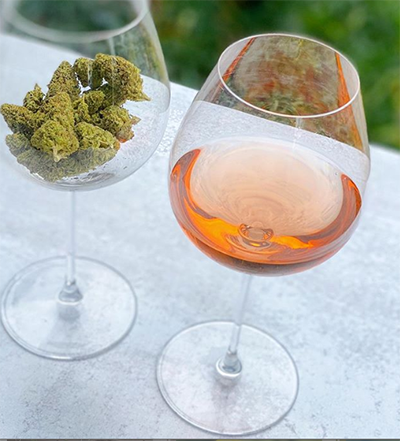
There are two glasses in front of you. One is filled with wine,the other with cannabis flower from Humboldt, the world’s mecca for pot. You smell each, and the aromas envelop you in a harmonious pairing. You’re enticed by the promise of flavors, textures and taste intensities. If you want to appreciate a cannabis and wine pairing, follow these steps.
There are two glasses in front of you. One is filled with wine, the other with cannabis flower from Humboldt, the world’s mecca for top-tier pot. You smell each, and the aromas envelop you in a harmonious pairing. You’re enticed by the promise of flavors, textures and taste intensities. If you want to appreciate a pairing of wine and Humboldt cannabis, follow these steps.
1. Know what your intention is. “Seek balance,” says Jamie Evans of The Herb Somm, a cannabis blog and lifestyle brand that focuses on the gourmet side of the cannabis industry. A lighter cannabis strain with uplifting effects, say Lemon Sour Diesel, will be served with a refreshing white wine like a Sauvignon Blanc, Chardonnary, or Albariño. However, if you aim for deep relaxation, pair the more earthy flavors of a calming cannabis strain such as White Tahoe Cookies with a well-structured and savoury wine like a Cabernet.
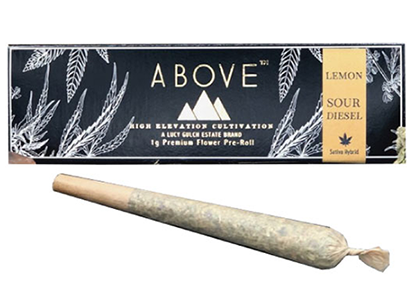
Lemon Sour Diesel by Above, Humboldt County
2. Learn about aromas. If you’re new to cannabis, study terpenes--more than 100 vibrant aromatic compounds found in cannabis--and focus on the dominant terpene of a cannabis strain, which is often Myrcene, Limonene, or Pinene. Once you’ve developed a palate and you start to know what you like, learn about the minor terpenes of the strain as well, because they play a subtle and important role. “The terpene complexity of cannabis is unparalleled,” says Kevin Jodrey, one of Humboldt County (and the world)’s finest cultivation experts. A good resource for terpene education is SC Labs . And if you’re new to wine, explore (at such sites as Wine Folly) the different varietals grown in different regions and see what speaks to you.
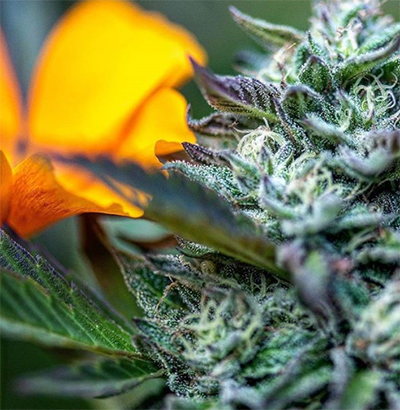
White Tahoe Cookies by Aloha Humboldt
3. Explore textures. A good wine will have a pleasant entry into the palate, and a long finish. Cannabis has smoke texture too, as well as tannins due to temperature swings between day and night on the farm where it grows. Notice the weight of the wine and the cannabis as you taste them. “It’s all about the extended finish,” says Sunshine Johnston, a legacy cannabis farmer in Humboldt County with years of experience as a wine broker. She runs Sunboldt Grown Farm (all her cannabis grows in native soil, under the sun). As for Kevin, his taste runs to “a heavier, fuller cannabis that envelops me, that grabs me, and in wine, a fuller-body red with deep complexities when it bites in my mouth. I like developed richness.”
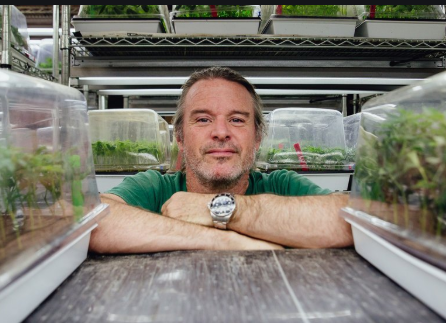
Kevin Jodrey, Humboldt County
4. Go wild. Pleasure comes from pairing wine made with as little manipulation as possible, like the natural wines that are now exploding in popularity in France, with cannabis that is cultivated with the least amount of human interference. The best winemakers don’t get in the way of the grape expressing the terroir, and the best cannabis farmers don’t inhibit the plant’s full expression of its terroir. Humboldt County is blessed by nature with diverse fertile soils, a moderate climate and intense rainfall. Humboldt cannabis farmers foster soil vitality through regenerative practices, which yields the extraordinary top-shelf cannabis that everyone wants. One of the strains at Sunshine’s farm is Wanderlust, exhibiting creamy, lemony flavors, almost like rotten oranges, which she loves to pair with a rich, mineral Chardonnay from Briceland Vineyards. For Sunshine, it’s “a sensory experience, you’re trying to build resonance.”
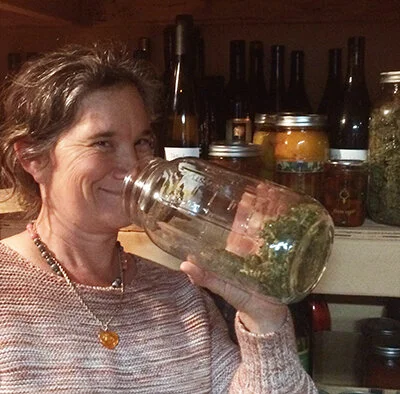
Sunshine Johnston, Sunboldt Grown, Humboldt County
5. Start low, go slow. Jamie advises a slow, gradual tasting and a glass of water always by your side. With wine, you can swirl it in the glass, smell it, take a small sip, and if you don’t like it, spit it out. Not so with cannabis. To make the pleasure last, don’t just consume cannabis to get high right away, but consider alternating smoking with eating raw cannabis-infused foods that reveal the rich flavors without the high. “When you eat raw cannabis-infused food, you feel good!” says Sunshine. When smoking, Jamie favors a dry flower vaporizer to enjoy the pure terpene profile while keeping the palate clean for other flavors.
Jamie Evans, The Herb Somm
6. Host a private party at home. Due to regulatory limitations, cannabis and wine pairing are best enjoyed as private events in an intimate, private home. If you have the resources, bring in both a ganjier whose passion and expertise are all about cannabis, and a sommelier obsessed with all things wine. Develop an appreciation of each on its own terms, and play with their union. Ultimately, if you enjoyed the pairing, then it was a good pairing!
Cheers!
How to use cannabis with your pet in Humboldt
Our lives are entwined with theirs, our world and their world swirled together long ago. When we see our pets anxious, or losing appetite, or in pain, we take care of them with a heart full of love. If you want to use cannabis safely with your pet in Humboldt, follow these steps.
Our lives are entwined with theirs, our world and their world swirled together long ago. When we see our pets anxious, or losing appetite, or in pain, we take care of them with a heart full of love. If you want to use cannabis safely with your pet in Humboldt, follow these steps.
1. Identify your pet’s condition for which you think cannabis might be helpful. Common conditions include pain, nausea, anxiety, epilepsy and cancer.
2. Be informed about cannabinoids. Cannabinoids are the active compounds found in cannabis and they interact with your pet’s endocannabinoid system—a central regulatory system that affects bodily processes such as sleep, mood and digestion. There are at least 113 cannabinoids in cannabis, most notably THC and CBD. CBD (cannabidiol) is the part of the plant with NO psychoactive properties, only medicinal properties. Your pet cannot get high from CBD. On the other hand, THC (tetrahydrocannabinol) is the part of the plant with psychoactive properties, and there are medicinal properties to THC as well. Because pets have so many more cannabinoid receptors in their brains and bodies than humans, very small doses will affect them profoundly. While THC products may have potential benefits, there’s insufficient scientific basis to make qualified recommendations. Products containing THC are best avoided for pets at this time.
3. Talk to your vet. Vets cannot prescribe cannabis or make recommendations, but they can provide education. Don’t be shy, vets want to know. “In our practice we make a habit of asking what products caregivers are using, how much is being administered, and what effects are noticed. We want to expand our knowledge base,” notes Sarah Green of Healing Spirit Animal Wellness Center in Eureka.

4. Go to a licensed dispensary (CApotcheck.com) to buy your cannabis product. Outside of dispensaries, there’s a flood of products that claim to be designed for pets. But many of these products don’t contain adequate doses of CBD, and they may contain dangerous levels of chemicals and pesticides. Products carried in licensed dispensaries in California must have compliance test results, so you know that any product is safe in terms of potency and contaminants.
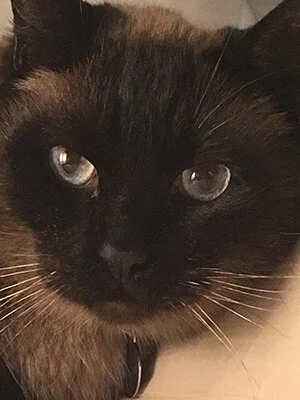
5. Consider tinctures. “Customers report that tinctures are good because you can control the dosage, and it’s not a new ‘treat’ but rather something added to existing food,” says Bryan Willkomm of Humboldt Patient Resource Center (HPRC).

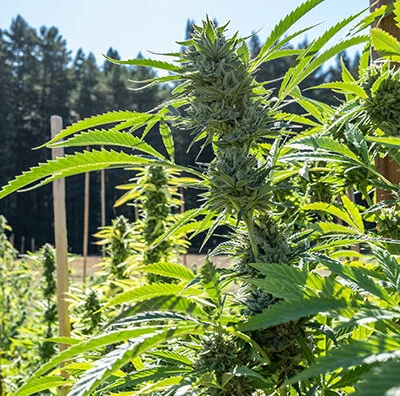
6. Buy organic. Unlike traditional agricultural regions impacted by heavy metals in the soil, Humboldt is home to hundreds of craft farms that grow plants organically and sustainably. Choose Humboldt cannabis for a safe, organic product.
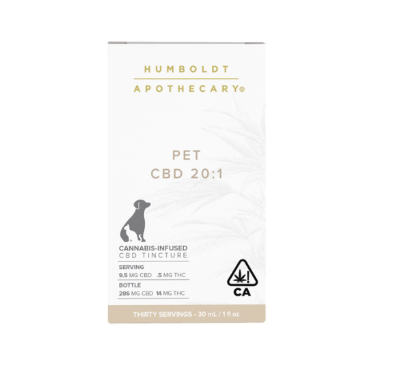
7. Choose a tincture that was safely extracted. CO2 and alcohol are the safest extraction techniques--other methods may leave behind residual chemicals that can be toxic to your pet. A good choice is Humboldt Apothecary’s ‘Pet CBD’ made using a cold ethanol wash.
8. Keep a journal. You’ll want to note when you give your pet cannabis, at what dosage, and what effects you notice.
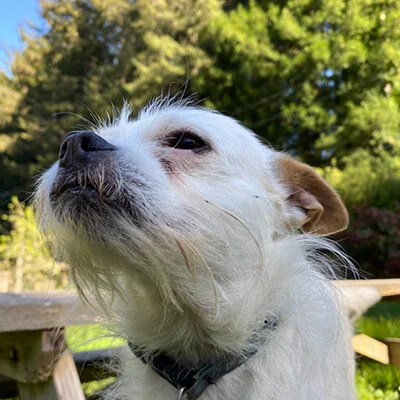
9 Start slow and low. For example, if a tincture’s recommended dosage is a half dropper, start with just 1 drop. Wait about 2 hours before serving again. A study published by Cornell University’s College of Veterinary Medicine in July 2018 found a dose 2 mg/ kg of body weight (about 45 mg for a 50 lb. dog) given twice a day to be effective in helping dogs with pain from osteoarthritis.
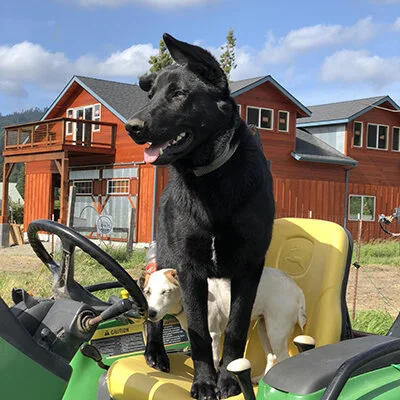
10. Store your product in a cool dark place out of your pet’s reach.
11. If your pet appears to be affected by too much cannabis, rest and hydration are recommended.
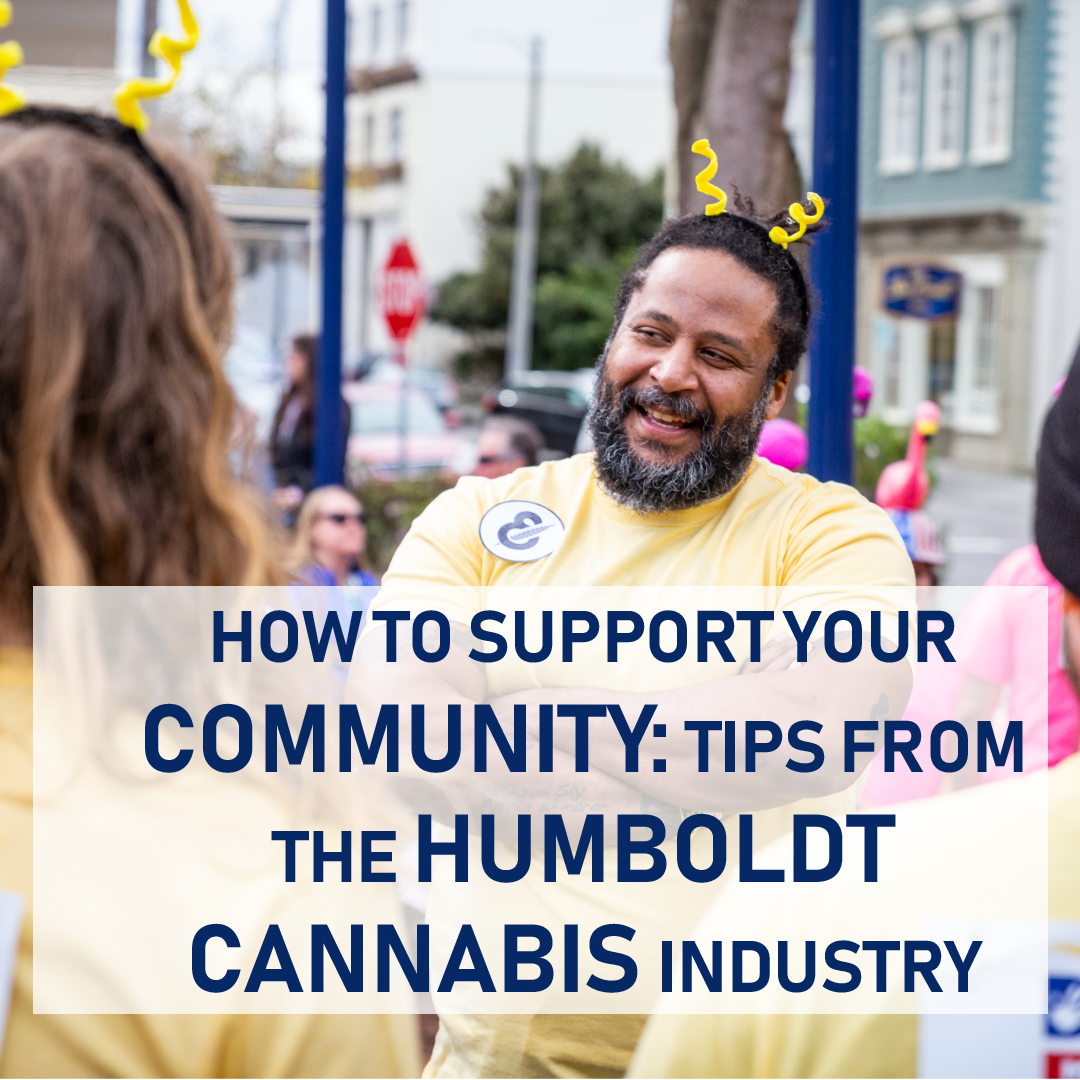
How to support your community -tips from the Humboldt Cannabis industry
In today’s world of intensifying global problems, finding new ways to live together is imperative more than ever. Here are tips from the Humboldt Cannabis industry on supporting community and sustainability.
1. Be clear on your priorities. Profits must be balanced against people and the planet--the triple bottom line. For Karen Hessler who runs Amaranth Farms with her husband, artist Tom Hessler, it’s not just about making money: "We’re doing the right thing, we’re helping people."
2. Participate in local fundraisers. In Humboldt, Papa & Barkley employees jumped into the freezing waters of the Humboldt Bay for the ‘Perilous Plunge’ fundraiser for the Redwood Discovery Museum.
3. Donate to local non-profits. Wherever you live, there are organizations dedicated to community building. Search them out and donate to them. The Humboldt-based cannabis manufacturing company BEAR Extraction House launched Project Humboldt Thrive: when farmers who work with BEAR donate to Project Humboldt Thrive, BEAR Extraction matches every donation. Recipients include the Mateel Community Center and the Eel River Recovery Project.
4. Share ownership and benefits. Structure your business to empower your stakeholders. Eureka-based Humboldt Homegrown is a network of cannabis farmers who not only produce flower for the brand, but who also become owners of the company and all the benefits it has to offer.
5. Insist on sustainability. Whether you are a farmer or an office worker, you can take action towards sustainability. Wendy Kornberg is the owner at Sunnabis Farm in Southern Humboldt, where her family grows cannabis organically and with minimal water use. “I imagine myself as a weed plant,” says Kornberg. “I hear birds, nature, the sounds of children. This is where I want to be.”
6. Give to those in need. Start by acknowledging their existence, and then give them something--from a smile to a meal and more. Humboldt’s community of medicine makers continues to actively support people with illnesses through compassionate care programs.
7. Take time. Take a breath, stop the monkey mind and nourish your humanity. “Cannabis is a powerful spirit,” says Lorelie Sandomeno whose farm, Sunrise Mountain Farms, is located in northeast Humboldt County. “It gives the gift of presence. It creates feelings of deeper connection.”
"How many kids will this one plant feed?
It’s shocking how many eat off the weed.
This plant will break down,
the wealth will spread ‘round--
Whole families fed from these plants we breed!"
Thyme, “215 Humboldt Trimmericks” available at Bayside Garden Supply and other stores in Humboldt County.
##
Nicole Riggs is the founder of Manifesto Synergies.
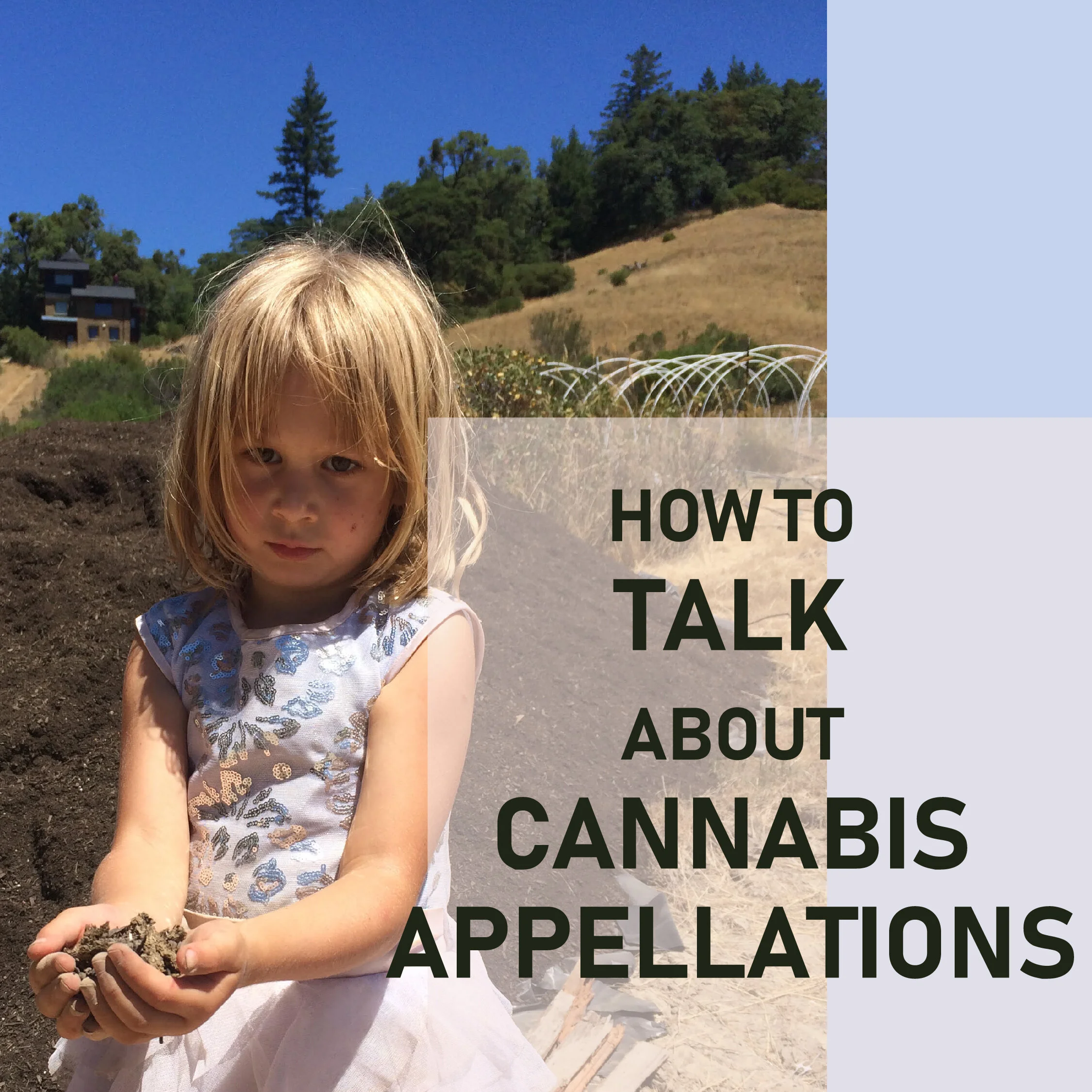
How to Talk about Cannabis Appellations
Talking about cannabis appellations can be intimidating. You don’t have to be an expert to think about terroir, experience how cannabis expresses the character of a place, and discover your own preferences.
Talking about cannabis appellations can be intimidating. You don’t have to be an expert to think about terroir, experience how cannabis expresses the character of a place, and discover your own preferences.
Appellations exist most famously for wine (“Bordeaux, anyone?”) but also for products such Roquefort cheese, Parma Ham, and more. They indicate a place of origin with unique factors that produce distinctive agricultural products.
The California Department of Food and Agriculture’s CalCannabis Appellations Project (“CAP”) is working on a program that will determine how cannabis appellations are defined and protected.
Here’s how to Talk about Cannabis Appellations:
1. Three areas come into play: Standards, Varietals and Practices.
2. Standards refer to the soil, light, water, and air that provide the conditions for cannabis cultivation. That’s ‘terroir,’ a French term that refers not only to soil but the overall native environment. For example, should only native soil qualify for an appellation product? To what extent do you think the soil can be optimized/altered with supplemental products and still express a region’s character? Or look at light. Is sungrown cannabis the only way to express the character of a place? Now consider water. Worldwide, clean water is an increasingly rare and valuable resource. How does water use impact your choice of cannabis?
3. Varietals is the term used in wine. In Cannabis, it’s often referred to as strains. Connoisseurs of cannabis recognize that the same strain grown with similar practices in different environments will look, taste and feel different. What strains most authentically express a region? Humboldt County is famed for strains such as Ice Cream Cake that won awards at the 2019 Emerald Cup and many others. As farmers grow and experiment, what strains should be included in appellations, and how far should farmers go with experimenting with new and hybrid strains?
4. Practices. That’s the last, but IMHO, not the least of the areas to look at. Practices refer to the human touch from planting to curing. Have you ever consumed cannabis flower that was too dry and not flavorful enough? You know, “styrofoam cannabis?” That can come from cannabis being cut too early, flush-dried, and rushed to market—the fast-food of the industry. Something to consider when you think about Appellation Cannabis is: what does it tell you about how the original plant was handled? How does that affect the taste of your cannabis product?
5. Develop your own taste. This one comes with a disclaimer: I’m a French person living in Humboldt for 20 years, I reported on the French and California wine industry for years, and I enjoy both wine and cannabis. The takeaway? Talk to others with a variety of opinions, enlarge your perspective and most importantly: explore what your personal taste is.
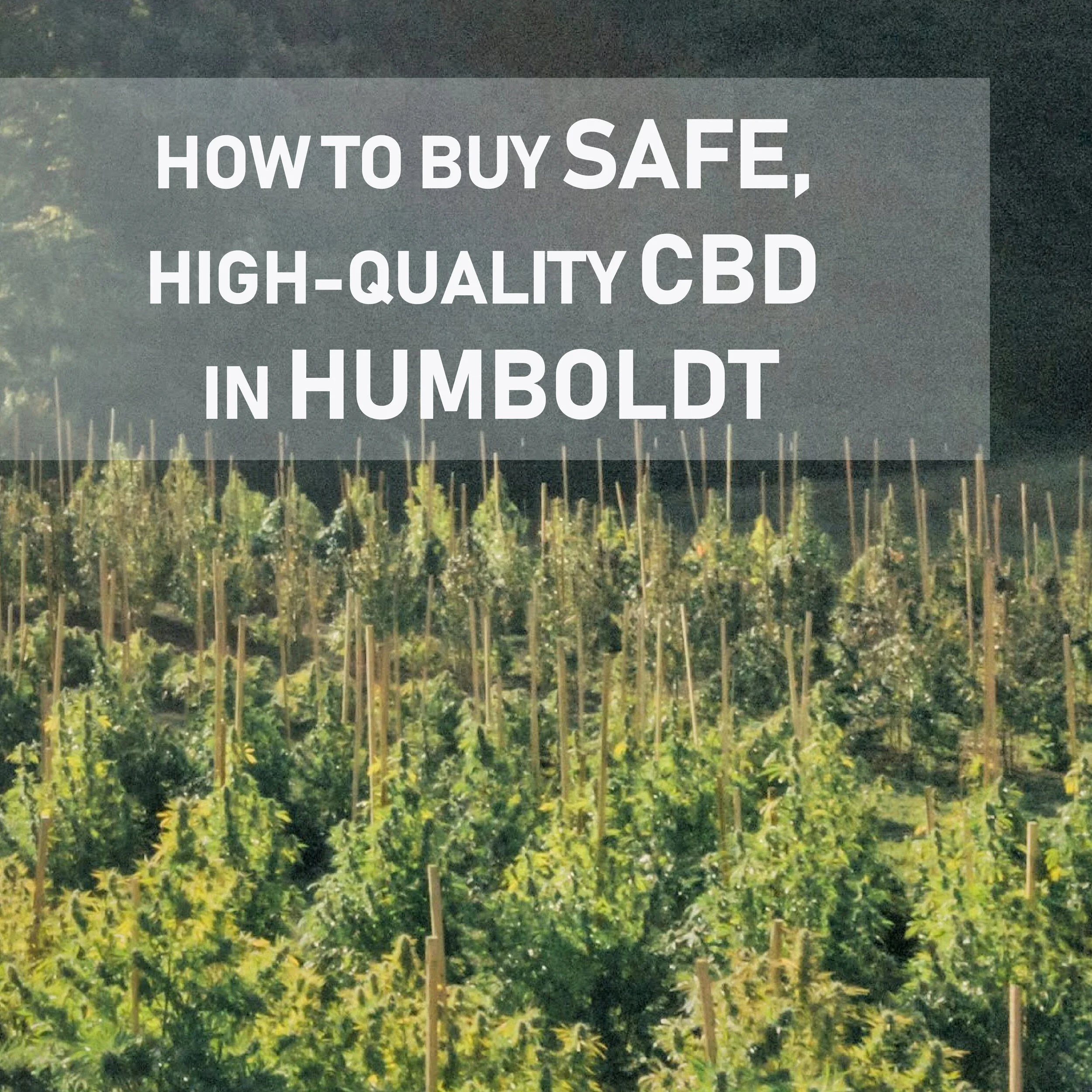
How to buy safe, high-quality CBD in Humboldt County
Does your body go off-balance due to chronic stress? Modern life and diet can cause deficiencies in our system. How do you reset it? A balanced lifestyle including exercise and a healthy diet are key, and CBD in small, regular amounts can be helpful for some. Here’s how to buy safe, high-quality CBD in Humboldt County.
7-minute read
Does your body go off-balance due to chronic stress? Modern life and diet can cause deficiencies in our system. How do you reset it? A balanced lifestyle including exercise and a healthy diet are key, and CBD in small, regular amounts can be helpful for some.
Here’s how to buy safe, high-quality CBD in Humboldt County. And read on for more discussion on the topic.
How to buy CBD in Humboldt
1. Go to a licensed dispensary (licensed dispensaries are listed at CApotcheck.com). Products carried in licensed dispensaries in California must have compliance test results, so you know that any product is safe in terms of potency and contaminants.
2. Ask the consultant at the dispensary for a product high on CBD and low on THC to help with managing a specific health issue--pain, sleep, inflammation, etc.
3. Tinctures or salves are a good product to start with, dosage can be easily adjusted. Ask for dosage recommendations.
4. Is the product extracted from Humboldt County-grown cannabis? Humboldt cannabis farmers have decades of experience growing superior quality cannabis organically and sustainably. You will also support local families of farmers.
5. Is the CBD extract full-spectrum, i.e. coming from the whole plant? Full-spectrum CBD extracts have exponential therapeutic effects whereas effects from single-molecule CBD extracts have been shown to hit a peak and then drop off.
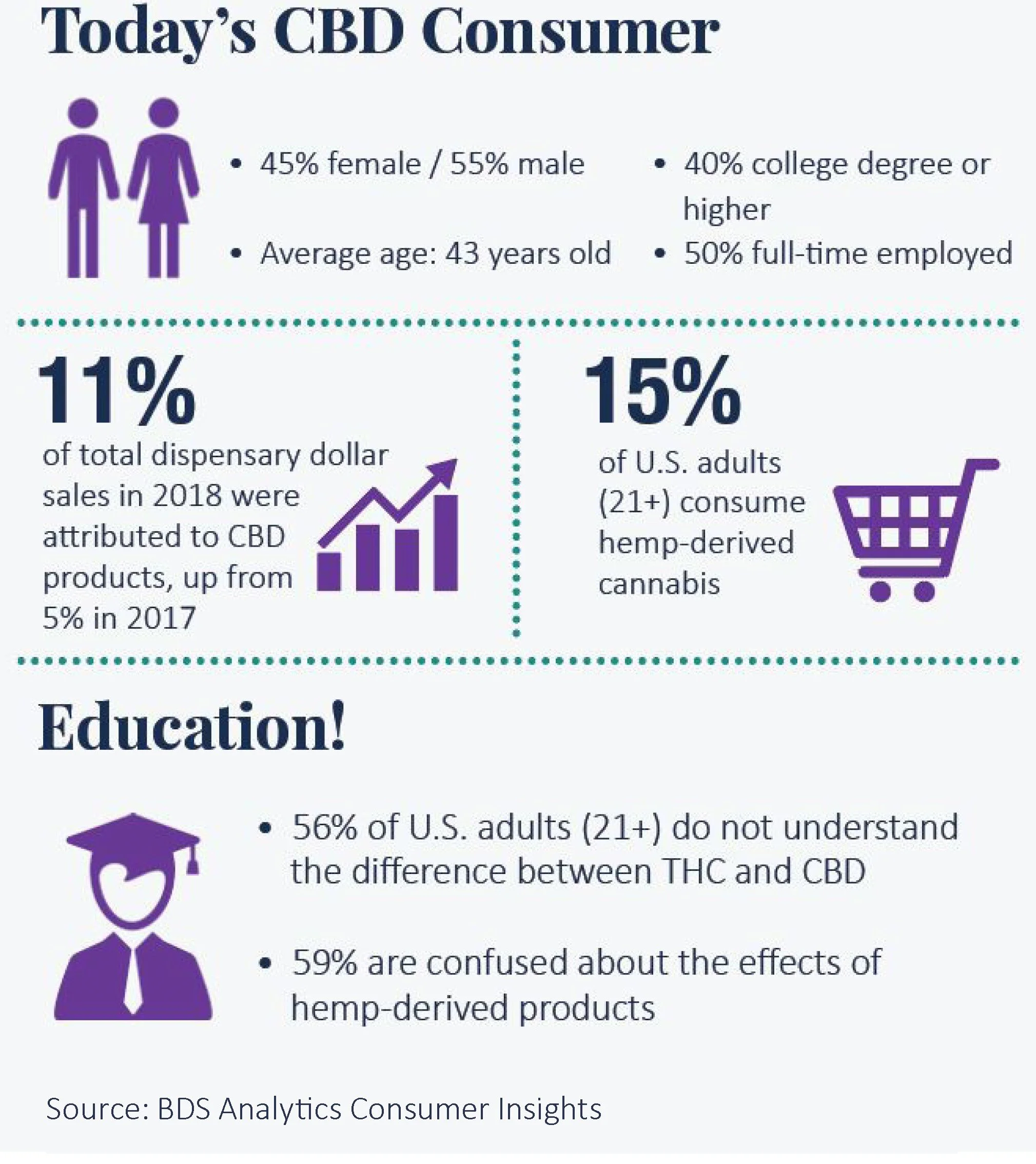
What is CBD? CBD is short for canabidiol , one of the many natural compounds found in cannabis. Both hemp CBD and cannabis CBD come from the same mother plant, Cannabis Sativa. The difference is one of designation based on the amount of THC contained in the plant. If the plant has more than 0.3% THC, it’s called cannabis. If it has less than 0.3% THC, it’s called hemp and the amount of THC is small enough to be considered nonexistent. The CBD compound has no psychoactive effect.
CBD and other cannabinoids interact with our internal Endocannabinoid System (ECS) which is largely responsible for homeostasis and regulates inflammatory responses in the body. “CBD works by mimicking the ECS molecules that regulate the immune system and the nervous system. It’s effective at reducing pain, anxiety and other health issues,” explains Gretchen Miller, co-owner of Kiskanu with her husband Jason. Their Eureka-based business manufactures craft, small-batch skin and body products. “Our production starts with sourcing cannabis from local organic farms,” notes Gretchen.
Similarly, Humboldt Apothecary has an absolute commitment to buying their cannabis exclusively from small farms in the county. “Here in Humboldt, we are fortunate to have the best-quality cannabis anywhere in the world,” explains Gillian Levy, co-founder of the business which manufactures tinctures and topicals. It’s not only important to start with the best plant material, but for CBD to be most effective, it’s also key to produce extracts out of the whole plant. Some CBD products are manufactured from isolates, or 100% pure CBD, and all the other compounds of the plant have been stripped away. By contrast, full-spectrum CBD include the plant’s naturally occuring terpenes and phytocannabinoids which have been shown to help in bioavailability meaning that the the body can better absorb and make use of the CBD. In an ideal world, consumers get the synergistic effect of full-spectrum products manufactured from the whole plant.
In terms of product safety, the CBD industry is largely unregulated and products labeled ‘CBD’ in stores may not match label ingredients or compliance. The surest way to buy a safe, fully-tested CBD product is to obtain it from a licensed dispensary, of which there are many in Humboldt County.
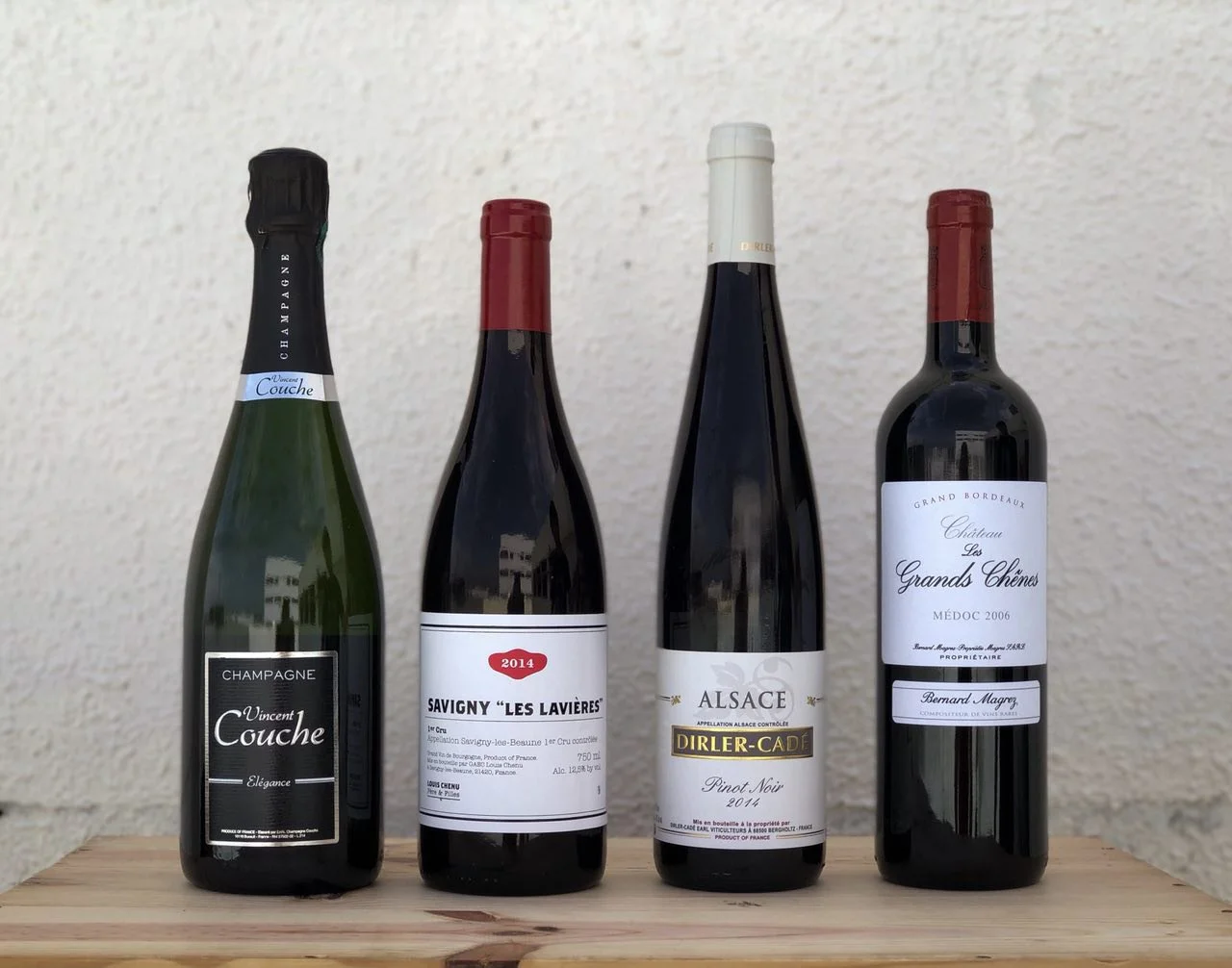
Humboldt Cannabis Appellations: Packaging Differentiation
Humboldt Cannabis Appellations: Packaging Differentiation
Much focus is given to French wine appellations when developing a framework for California Cannabis Appellations. French wines come in different shape bottles. Although the bottle shape doesn’t impact the wine’s flavor, it is a powerful identifier of the region from where the wine is produced. The Alsace wine bottle is long and fluted, the Bordeaux bottle is straight and tall. Burgundy presents itself in a bottle with gently sloping shoulders and a slightly wider body.
Humboldt County may find it valuable to consider a required packaging for its flower products that sets it apart from cannabis produced outside the Humboldt County Appellation. The packaging would reflects the environmental consciousness that has long existed in the region, and therefore be made without plastic but with a sustainable material. In addition, the packaging should ensure the longevity of the superior product.
What are your ideas about packaging for Humboldt Cannabis products?
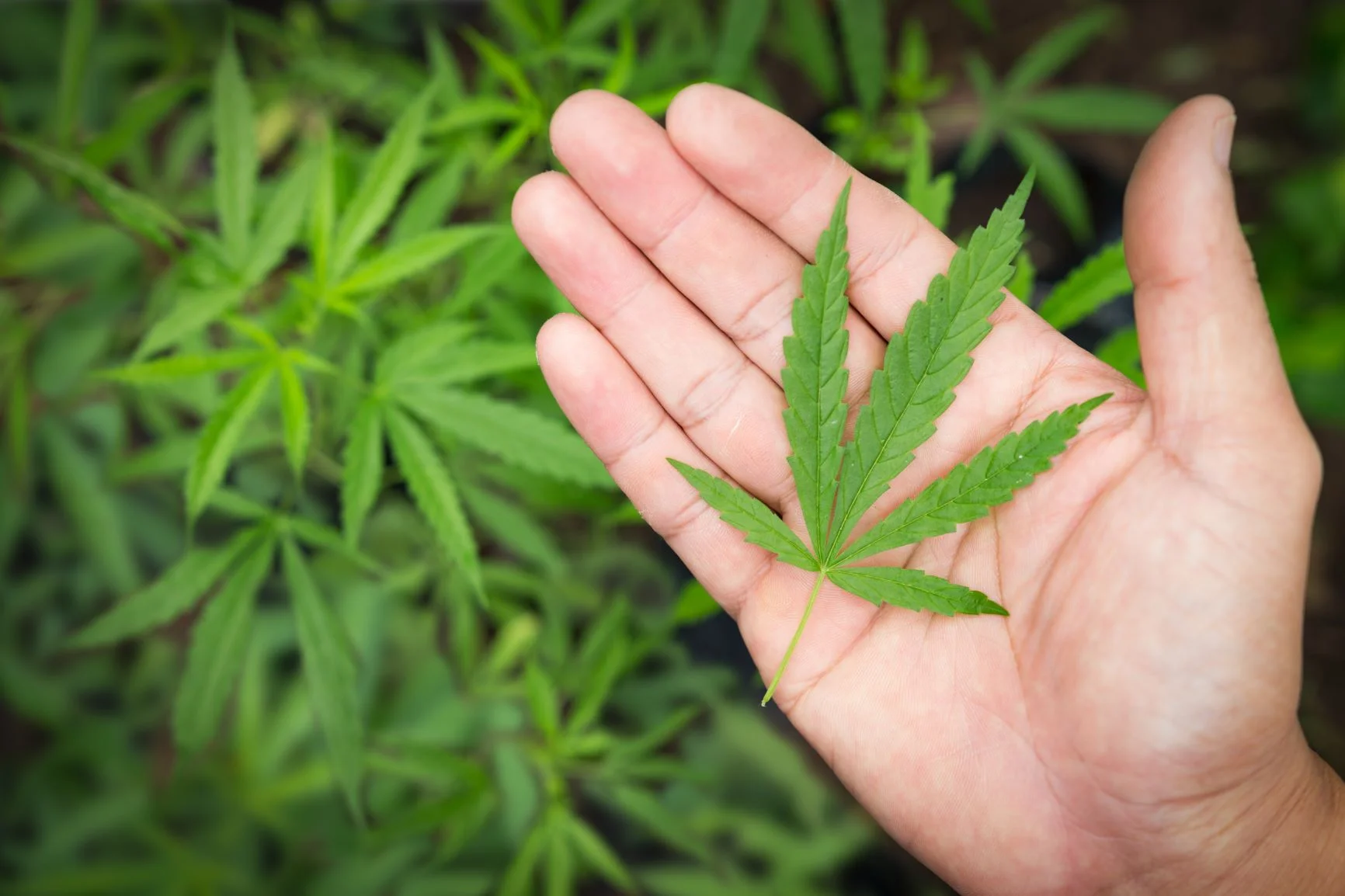
Humboldt Cannabis Appellations: Further Thoughts
Humboldt Cannabis Appellations. Shall we work together towards solutions?
So I’ve shared some ideas and questions about Humboldt Cannabis Appellations. Here are further thoughts, would love your feedback. We’ll advance best when we collaborate on solutions that truly meet the needs of the Humboldt County cannabis community.
Production requirements
French Wine Appellations have stringent production requirements including but not limited to grapes coming 100% from their respective regions. In addition, the manufacture of grapes into wine is highly regulated to ensure that it is produced locally and at the highest standards. In California, the law already prohibits businesses from marketing as ‘Humboldt’ any cannabis that is not grown in Humboldt. Some states have mandated vertical integration of the supply chain, but California has taken a highly regulated approach with discrete actors requiring licenses for each step of the chain. There remain several open questions regarding the requirements imposed on the supply chain downstream and how these come under an Appellation system. For example, should secondary products derived from Humboldt Cannabis be manufactured in Humboldt County to earn the Appellation designation, just as an AOC wine is produced within the Appellation?
Enforcement
So long as marijuana remains illegal at the federal level, states should develop their own Appellation systems, while maintaining federally-legislated bans on import/export. It may prove beneficial to have an established framework in place at both the county and state level ahead of the day when the federal prohibition is lifted. While there will undoubtedly be challenges to enforcing Appellation law if other jurisdictions do not follow, it seems likely that established Appellation frameworks will incentivize regulation at the federal level. Trade bodies such as the Humboldt County Growers Alliance (hcga.co) are instrumental in developing policy making to differentiate HC Appellation differentiation and generate market value.
Education and Consumer Protection
One of the significant benefits of an Appellation system based on the French AOC system is that it provides consumers with far more information than just place of origin. As the HC Appellation gets established, it will be key to clearly and consistently communicate important data to consumers, including the strain, THC/CBD levels, etc.
What are your thoughts?
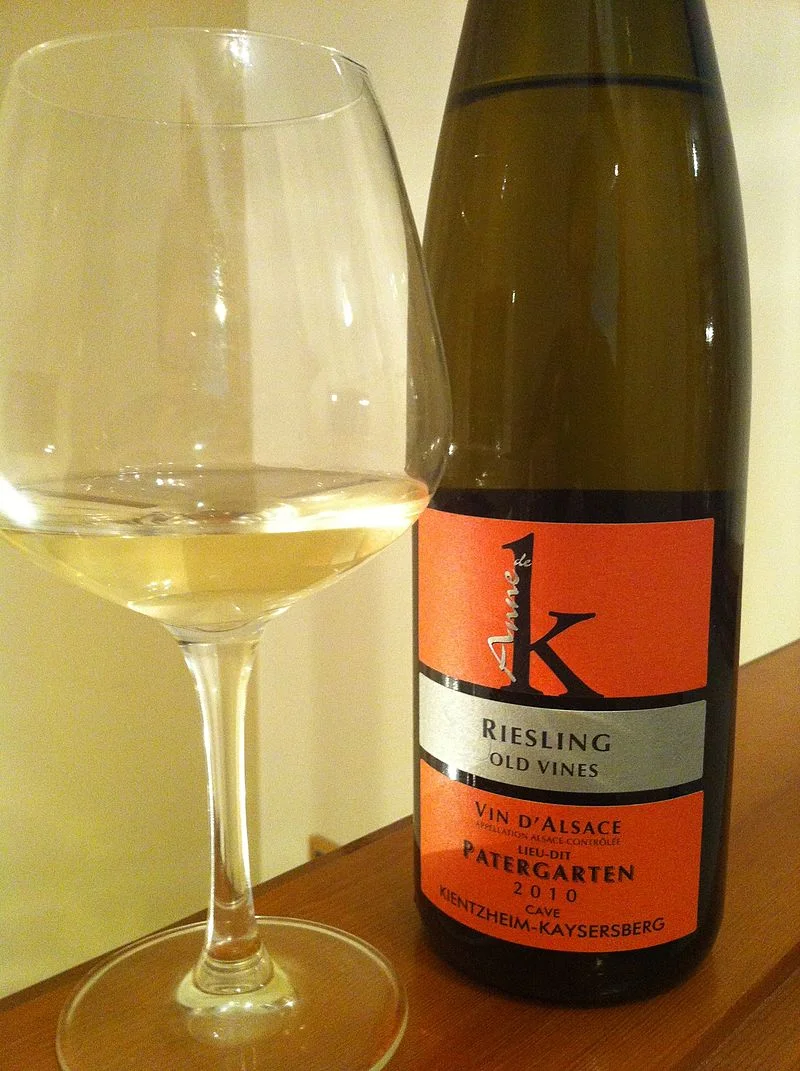
Humboldt Cannabis Appellations: Lieux-dits
Humboldt Cannabis Appellations could use locales (lieux-dits).
As of May 2019, there are over 1300 licensed cannabis cultivators in Humboldt County. The cultivators are spread across the forested, mountainous terrain of the county and speak to the tradition of cannabis growing in the various micro-climates of the region. An Appellation system that values unique micro-climate locations is more likely to benefit the long-term sustainability of small-scale cannabis farmers in Humboldt. Turning to Alsace, there are three Appellations and long a rich, long history of ‘lieu-dit’ (locales), with over 50 lieux-dits in its AOC. As an alternative to Mendocino’s system of multiple Appellations based on geography, further research into a single HC Appellation with a multiplicity of lieux-dits may prove fruitful in the establishment of Humboldt Cannabis Appellation guidelines.
Lieux-dits (pronounced liuh dee) is a French toponymic term for a smaller geographical area within the Appellation. Three possible translations for a Humboldt Cannabis lieu-dit are ‘townland’ locale’ and ‘place-name.’
What do you think of establishing ‘lieux-dits’ within the Humboldt Cannabis Appellation?
The case for Humboldt Cannabis Appellations
It’s changing before our eyes. Cannabis in California. Scared? Greedy (you know who you are)? Excited? A guide in this new adventure: Making the case for Humboldt Cannabis Appellations.
It’s changing before our eyes. From illegal to regulated, cannabis in California is evolving so fast that we don’t know what to feel. Scared. Greedy (you know who you are). Also excited. Going into the big unknown.
A possible guide in this adventure? Cannabis Appellations. I’m making the case for Humboldt Cannabis Appellations. Because we have a tradition, micro climates and unique packaging potential that would set Humboldt Cannabis apart. We may not agree, but let’s start talking.
An Appellation is a legally defined and protected geographical indication used to identify where an agricultural product comes from and how it’s produced.
In 2018, the California Department of Food and Agriculture (CDFA) established the CalCannabis Appellations Project to expand on county of origin regulations and create a statewide Appellations system. It is is required to establish the process for cannabis Appellations by January 1, 2021. THE CDFA has already established in its county-of-origin regulations that to be eligible for the designation, 100 percent of the cannabis shall be produced within the designated county, as defined by finite political boundaries.
Why Humboldt Cannabis Appellations?
Humboldt County has a rich and long history of small-scale farms cultivating cannabis. A Humboldt Cannabis (HC) Appellation will benefit Humboldt County cannabis businesses in three main ways: Protection, Innovation and Sustainability.
Protection.
HC Appellation could provide legal protection by:
preventing the use of ‘Humboldt’ branding for cannabis not 100% grown in Humboldt
promoting artisanal small-scale cultivation that focuses on sustainability, original seeds, etc.
reducing the risk of turning cannabis into a commodity that’s driven by price only
2. Innovation.
For Humboldt County cultivators already passionate about growing the best cannabis, an HC Appellation system will support their research and development in:
defining bottom-up regulation standards
exploring with hybrid strains
enacting best practices for sustainable cultivation that have the potential to become models for other crops around the world
3. Sustainability.
Tourism is a a key driver of economic success in Humboldt County. An HC Appellation will:
attract more visitors who want to discover genuine cannabis cultivation and process in the place of origin
provide long-term employment across the cannabis supply chain from growers to manufacturers, distributors, retailers and consumption spaces
enable Humboldt County residents to stay, thrive, and give their community a bright future.
Look at Alsace as well as Champagne for Cannabis Appellations?
Tradition: Humboldt County’s experiment with strains and hybrids
The large number of cannabis strains in Humboldt County and the potential for new ones is worth comparing to the varietals requirements in Alsace as well as Champagne.
The number and variety of strains is deeply connected with terroir: Humboldt County growers have spent decades researching cannabis strains and genetics to find those best suited to the climate, for example strains that are highly resistant to pathogens. At the same time, experimenting continues with new hybrids. An Appellation framework that specifies strains and allows and the development of new ones after regulatory requirements is key to innovation for Humboldt County cannabis.
Lieux-dits: a strength for Humboldt County’s cannabis micro-climates
Humboldt Cannabis cultivators are spread across the forested, mountainous terrain of the county and speak to the tradition of cannabis growing in the various micro-climates of the region.
An Appellation system that values unique micro-climate locations is more likely to benefit the long-term sustainability of small-scale cannabis farmers in Humboldt. Turning to Alsace, there are three Appellations and long a rich, long history of ‘lieu-dit’ (locales), with over 50 lieux-dits in its AOC. As an alternative to Mendocino’s system of multiple Appellations based on geography, further research into a single HC Appellation with a multiplicity of lieux-dits may prove fruitful in the establishment of Humboldt Cannabis Appellation guidelines.
Packaging differentiation
French wines come in different shape bottles. Although the bottle shape doesn’t impact the wine’s flavor, it is a powerful identifier of the region from where the wine is produced. The Alsace wine bottle, long and fluted, is immediately recognizable.
Photo credit: Frenchcellar.com
Humboldt County may find it valuable to consider a required packaging for its flower products that sets it apart from cannabis produced outside the HC Appellation. The packaging would reflects the environmental consciousness that has long existed in the region, and therefore be made without plastic but with a sustainable material. In addition, the packaging should ensure the longevity of the superior product.
Humboldt County: cannabis is part of who we are. In this new adventure, Humboldt Cannabis Appellations can make us strong. Let’s keep it real, let’s be smart and give our community a great future.
What do you feel are the pros and cons of Humboldt Cannabis appellations?
Nicole Riggs is the founder of Manifesto Synergies, providing communications and brand strategies to the Humboldt County cannabis industry. You’ll find her at Moonstone Beach or the Arcata Forest when she’s not drinking (Alsace) wine with friends.