
A Raw Cannabis Culinary Delight
Sunshine Cereceda, owner of Sunboldt Grown, shares her tips for making fresh-cannabis infused honey. Cannabis is a culinary experience to enjoy infused in food and paired with wine.
“I got into fresh-infused foods when a friend of mine sent a recipe for making bhang tea with fresh ganja,” recalls Sunshine Cereceda, the well-known founder of Sunboldt Grown in Humboldt County. “Well, shoot!” I thought, “I have fresh ganja in my backyard, I’m going to make it.”
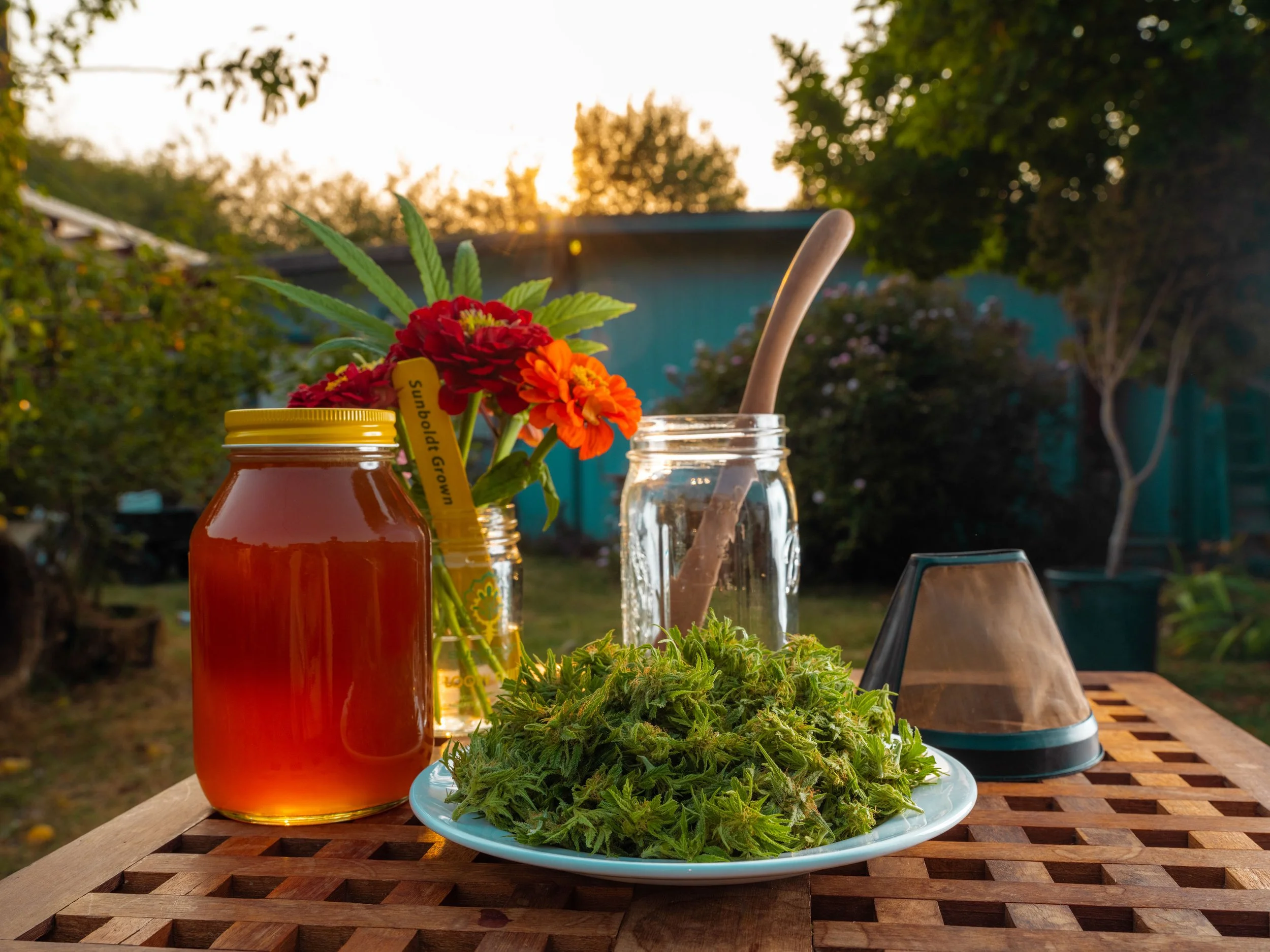
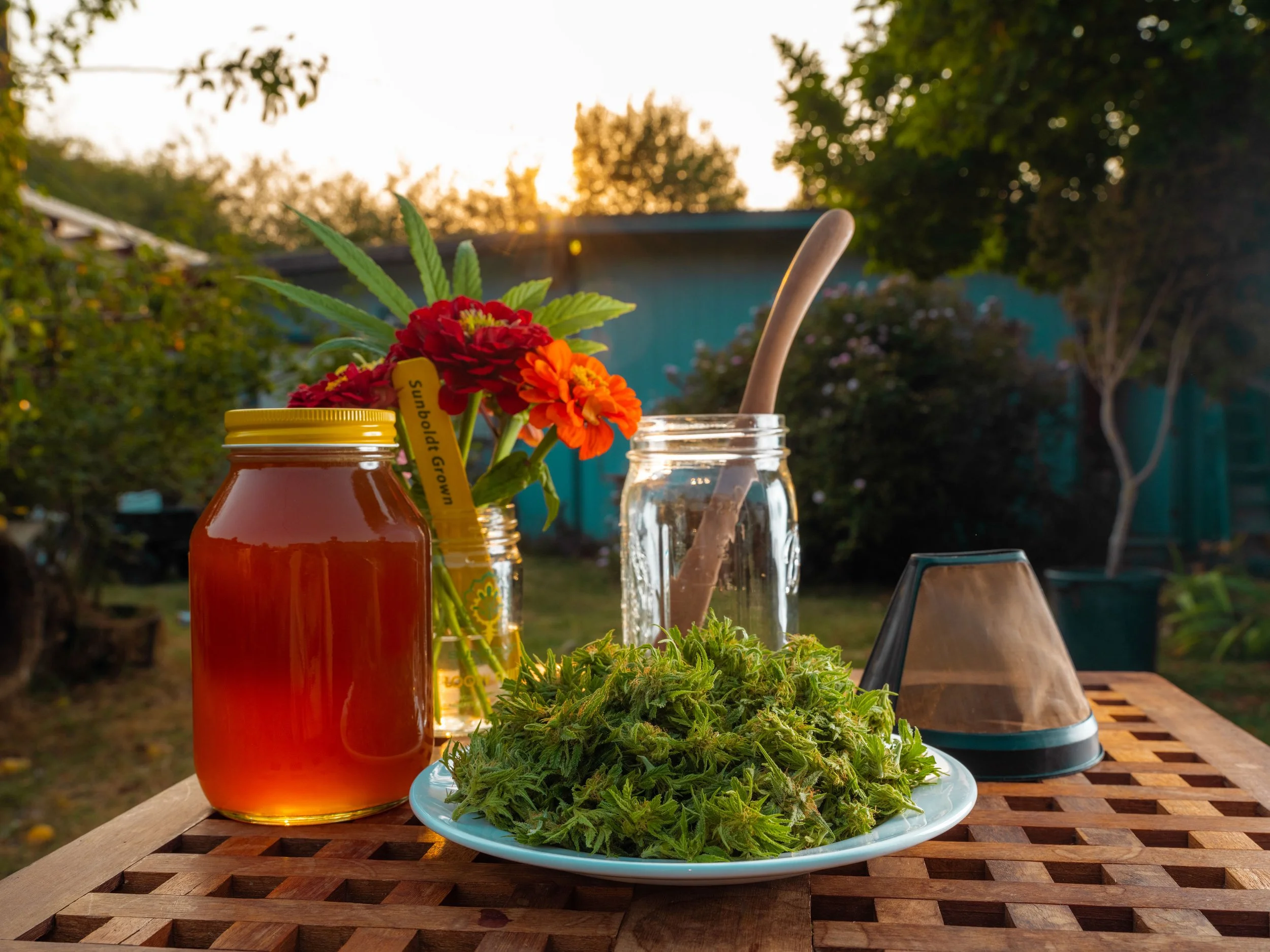
Fresh cannabis for honey infusion at Sunboldt Grown, Humboldt County, California.
She ground up the spices and cannabis with a mortar and pestle and shared the tea with her neighbor, who is not much of a cannabis consumer. They noticed it didn’t get them high, but they liked the effect, which was balancing. They felt relaxed and yet strong at the same time.
We’re learning that consuming raw cannabis can be effective in stimulating the endocannabinoid system, which keeps our body in balance. Known as a superfood, cannabis is packed with terpenes, cannabinoid acids, flavonoids, antioxidants, minerals, and vitamins. Because it’s not heated, fresh cannabis is packed with THCA, the most abundant non-psychoactive cannabinoid found in cannabis. It has soothing properties and helps with the functions of the nervous system.*
For home growers, making their own products is an exciting way to explore the flavors and benefits of this superfood. When you grow your cannabis, you can make sure that no chemical pesticides are used, and that the flowers and leaves of the plant are organic.
“I went on to infuse other things, like coconut oil, nut milk, butter,” explains Sunshine. Honey is an excellent base to infuse with fresh cannabis from the garden because it captures the unique flavor of the cultivar that’s been growing and it doesn’t need to be refrigerated, unlike other cannabis infusions. A citrus-flavored cultivar like Sunboldt’s Wanderlust strain infuses well in a light honey like clover or sage.
Michael Magallanes is the chef behind Opulent Chef, a catering company that also curates cannabis-infused or cannabis-paired dining experiences. He has used honey infused with Sunboldt Loopy Fruit strain multiple times. “One thing I like to do is to make a ginger-lime-honey spritzer to serve to guests as they arrive at the party,” he explains. “They get to talk about it, they’re blown away by the fact that they get to enjoy the flavor but they’re not getting high.”
Sunshine and the Opulent Chef have the same vision: “We hope there’ll be many small home growers with a couple of plants in their yard who can explore the consumption of raw cannabis.” Cannabis is a culinary experience to enjoy infused in food and paired with wine.

No, that's not terroir
As the market explodes, most consumers will go for standardized cannabis. But there is and will always be those that want to know where their product comes from, how it was grown, and by whom. That’s your terroir customers.

A varietal does not make terroir
Humans create diversity all the time. Cakes, Zkittlez or Blue Dream anyone? Just look at wine: not even 10 years ago, there were predictions by economists that all wine production would go towards the same varietals, and that a Chardonnay from Australia would taste similar to a Chardonnay from Burgundy or a Chardonnay from California. But producers are increasingly focused on making a product that speaks of place.
The soil does not make terroir
Yes, native soil is essential to the expression of terroir. But let’s not fall into geological determinism. The role of soil in a product is similar to the role of art supplies in a great painting. It takes producers with an intimate knowledge of their environment to produce quality terroir cannabis.
Craft does not make terroir
Not even the most skilled farmer can grow terroir cannabis if it’s divorced from its natural environment. Not even the most innovative producer can create terroir cannabis if they’re not invested in the place where they produce.
Collective production over time makes terroir Terroir takes meaning as global collective value in a regional context. It’s the power of local “membership” that links terroir with heritage. It’s a sense of cultivating and being rooted in a place over time. If you look at wine, UNESCO has added multiple winegrowing regions to world heritage sites and not just in France or Italy but also the upper Rhine region in Germany or the upper Douro Valley in Portugal.
As the market explodes, most consumers will go for standardized cannabis. But there is and will always be those that want to know where their product comes from, how it was grown, and by whom. That’s your terroir customers.
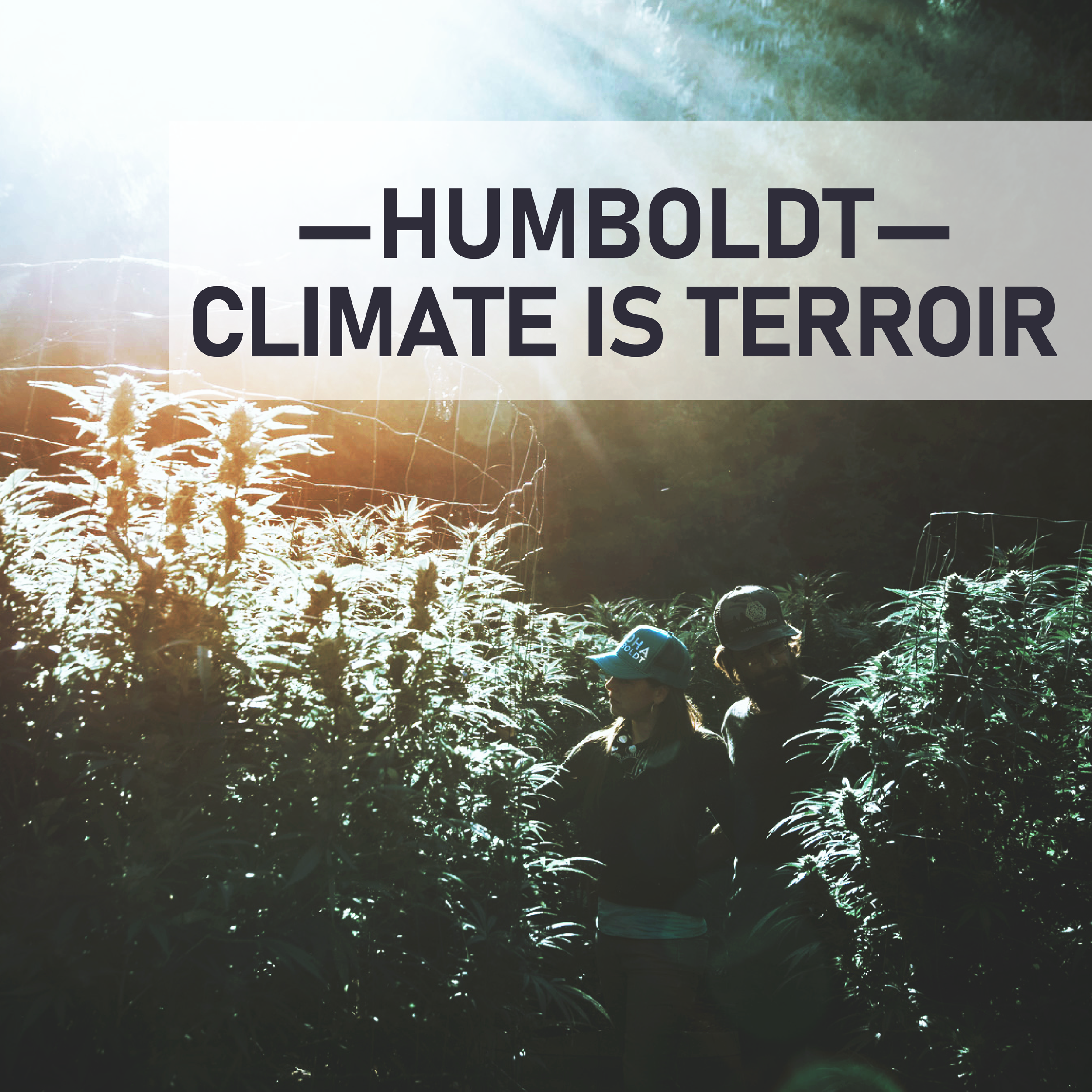
Cannabis in Humboldt: Climate is Terroir
“Climate” orginally refers to a place’s slope or inclination in relation to the sun. Why does that matter? Because cannabis cultivation places in Humboldt are what defines the quality of the product, and what makes it stand apart. Read on!
Climate originally means a place’s slope or inclination in relation to the sun. In Burgundy, France, the “Climats” are vineyard plots and in 2015, the “Burgundy Climats” won recognition as a Unesco World Heritage site.
Why does it matter? Because it’s about the whole environment of a micro-climate. Every place is infinitely unique, infinitely diverse. And people are not independent of this. Their practices shape the environment in which the products grow. In successful terroir economies (think Colombian coffee, Argan oil, Burgundy wine) producers reinvest into their local environment both physical and cultural. Always invest in the place, the ‘climat’, because the quality of the product comes from the place.
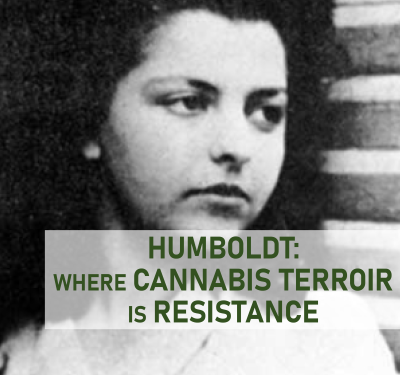
Humboldt: Where Cannabis Terroir Is Resistance
After World War II, formed by the power of the Resistance, French cheese makers began to organize themselves to protect and sustain small craft cheese production in rural regions of the country. They formed syndicats, promoted the quality of their product for export and tourism, and mobilized locally to establish new cheese appellations. They resisted agro-industrial production.
After World War II, formed by the power of the Resistance, French cheese makers began to organize themselves to protect and sustain small craft cheese production in rural regions of the country. They formed syndicats, promoted the quality of their product for export and tourism, and mobilized locally to establish new cheese appellations. They resisted agro-industrial production.
Today, cannabis farmers in Humboldt, hundreds of them, want to sustain themselves and their communities by continuing to produce high quality small batch cannabis grown with regenerative practices. They resist in these three ways:
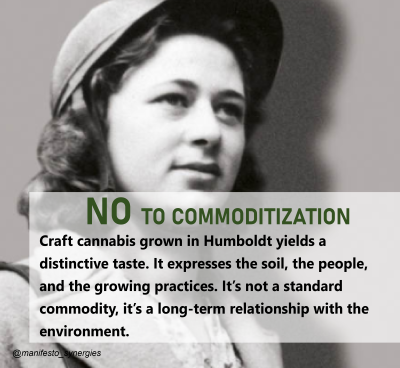
1. NO TO COMMODITIZATION
Craft cannabis grown in Humboldt yields a distinctive taste. It expresses the soil, the people, and the growing practices. It’s not a standard commodity, it’s a long-term relationship with the environment.
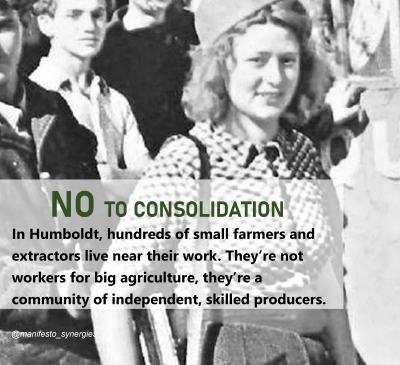
2. NO TO CONSOLIDATION
In Humboldt, hundreds of small farmers and extractors live near their work. They’re not workers for big agriculture, they’re a community of independent, skilled producers.
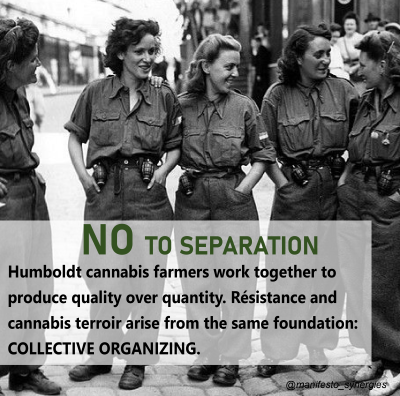
3. NO TO SEPARATION
Humboldt cannabis farmers work together to produce quality over quantity. Résistance and cannabis terroir arise from the same foundation: COLLECTIVE ORGANIZING.
##
Nicole Riggs is the founder of Manifesto Synergies, an agency providing communication services to the cannabis industry in Humboldt.