
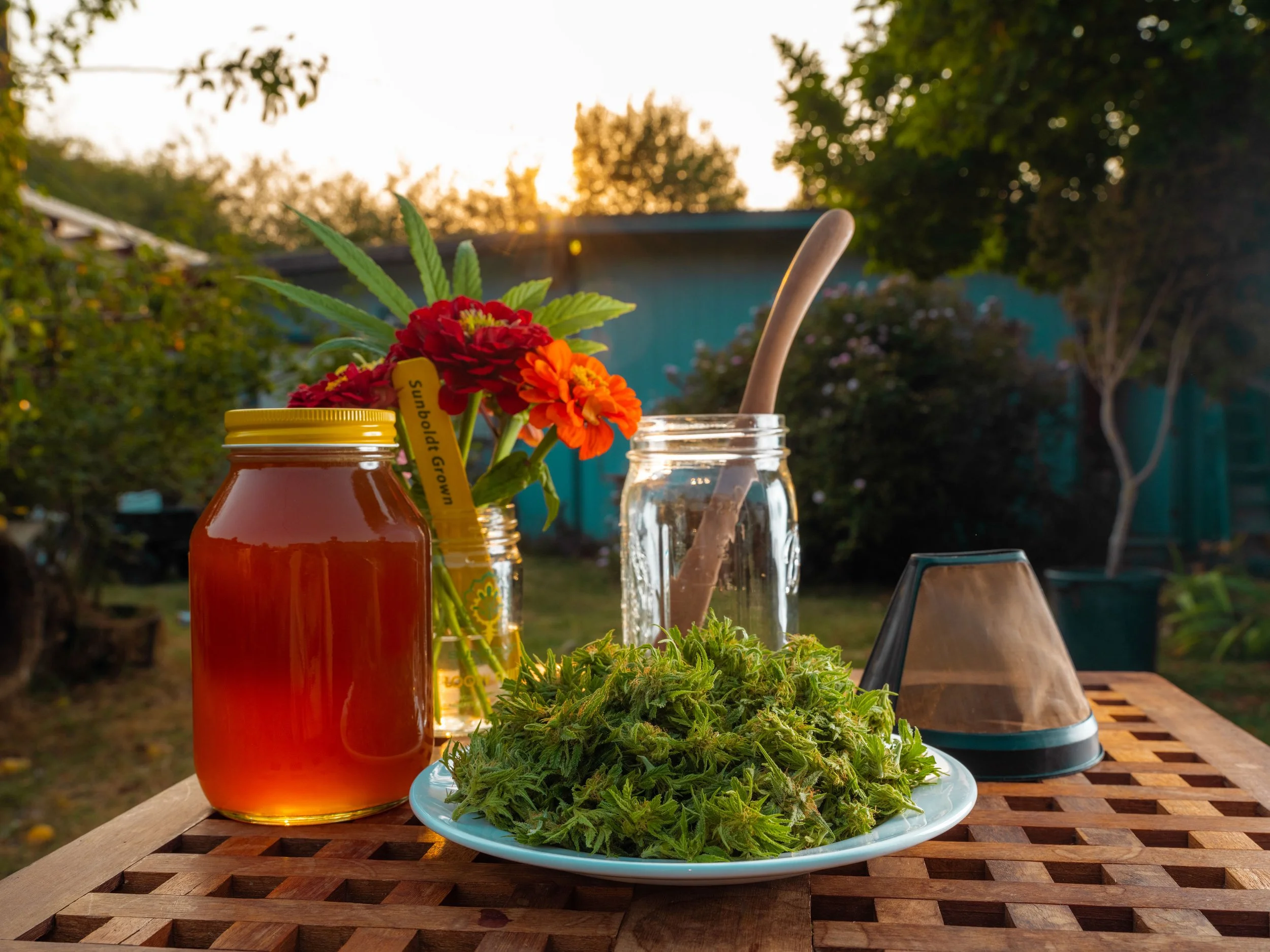
A Raw Cannabis Culinary Delight
Sunshine Cereceda, owner of Sunboldt Grown, shares her tips for making fresh-cannabis infused honey. Cannabis is a culinary experience to enjoy infused in food and paired with wine.
“I got into fresh-infused foods when a friend of mine sent a recipe for making bhang tea with fresh ganja,” recalls Sunshine Cereceda, the well-known founder of Sunboldt Grown in Humboldt County. “Well, shoot!” I thought, “I have fresh ganja in my backyard, I’m going to make it.”
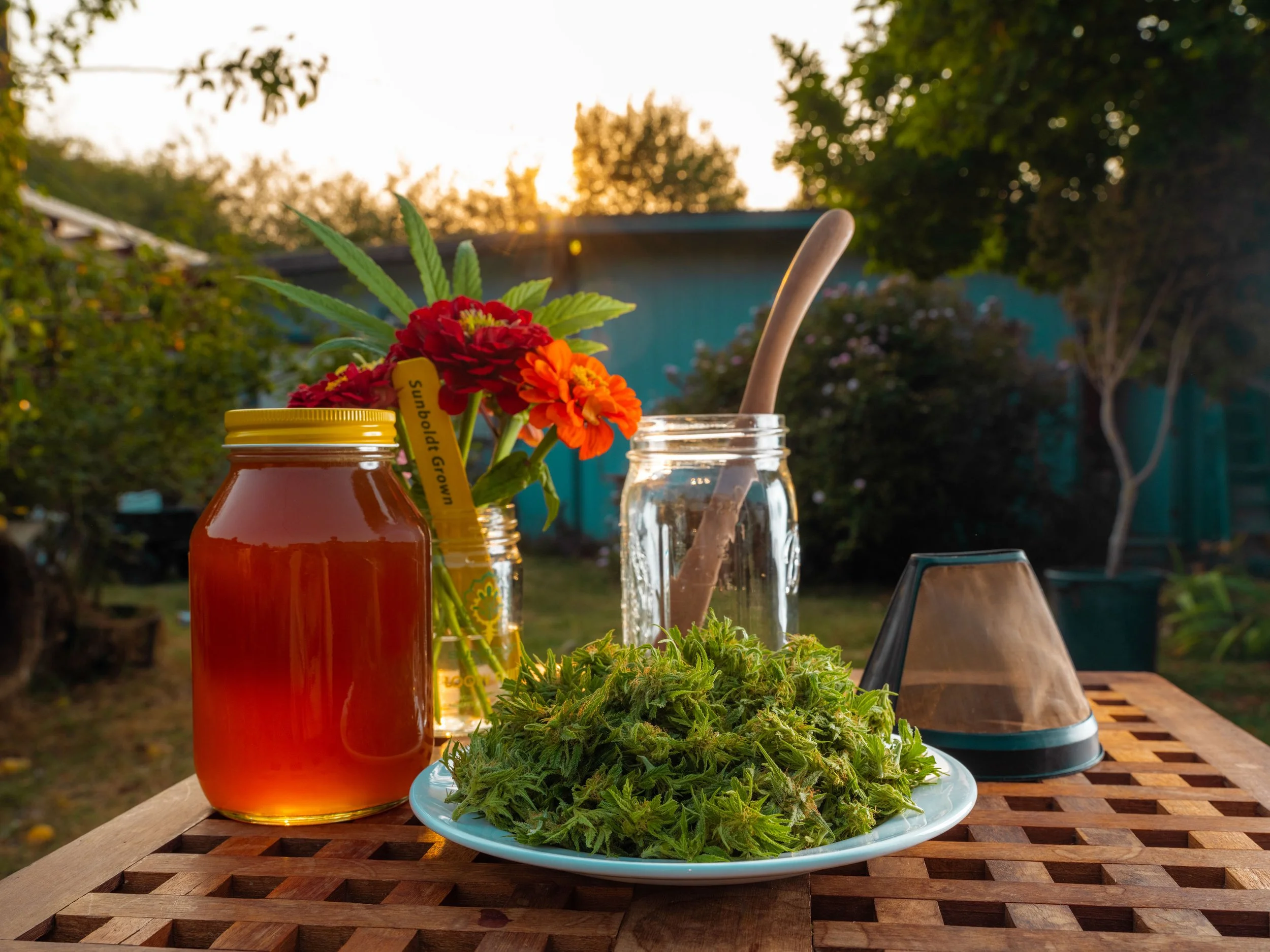
Fresh cannabis for honey infusion at Sunboldt Grown, Humboldt County, California.
She ground up the spices and cannabis with a mortar and pestle and shared the tea with her neighbor, who is not much of a cannabis consumer. They noticed it didn’t get them high, but they liked the effect, which was balancing. They felt relaxed and yet strong at the same time.
We’re learning that consuming raw cannabis can be effective in stimulating the endocannabinoid system, which keeps our body in balance. Known as a superfood, cannabis is packed with terpenes, cannabinoid acids, flavonoids, antioxidants, minerals, and vitamins. Because it’s not heated, fresh cannabis is packed with THCA, the most abundant non-psychoactive cannabinoid found in cannabis. It has soothing properties and helps with the functions of the nervous system.*
For home growers, making their own products is an exciting way to explore the flavors and benefits of this superfood. When you grow your cannabis, you can make sure that no chemical pesticides are used, and that the flowers and leaves of the plant are organic.
“I went on to infuse other things, like coconut oil, nut milk, butter,” explains Sunshine. Honey is an excellent base to infuse with fresh cannabis from the garden because it captures the unique flavor of the cultivar that’s been growing and it doesn’t need to be refrigerated, unlike other cannabis infusions. A citrus-flavored cultivar like Sunboldt’s Wanderlust strain infuses well in a light honey like clover or sage.
Michael Magallanes is the chef behind Opulent Chef, a catering company that also curates cannabis-infused or cannabis-paired dining experiences. He has used honey infused with Sunboldt Loopy Fruit strain multiple times. “One thing I like to do is to make a ginger-lime-honey spritzer to serve to guests as they arrive at the party,” he explains. “They get to talk about it, they’re blown away by the fact that they get to enjoy the flavor but they’re not getting high.”
Sunshine and the Opulent Chef have the same vision: “We hope there’ll be many small home growers with a couple of plants in their yard who can explore the consumption of raw cannabis.” Cannabis is a culinary experience to enjoy infused in food and paired with wine.
Does the Market Impact Terroir?
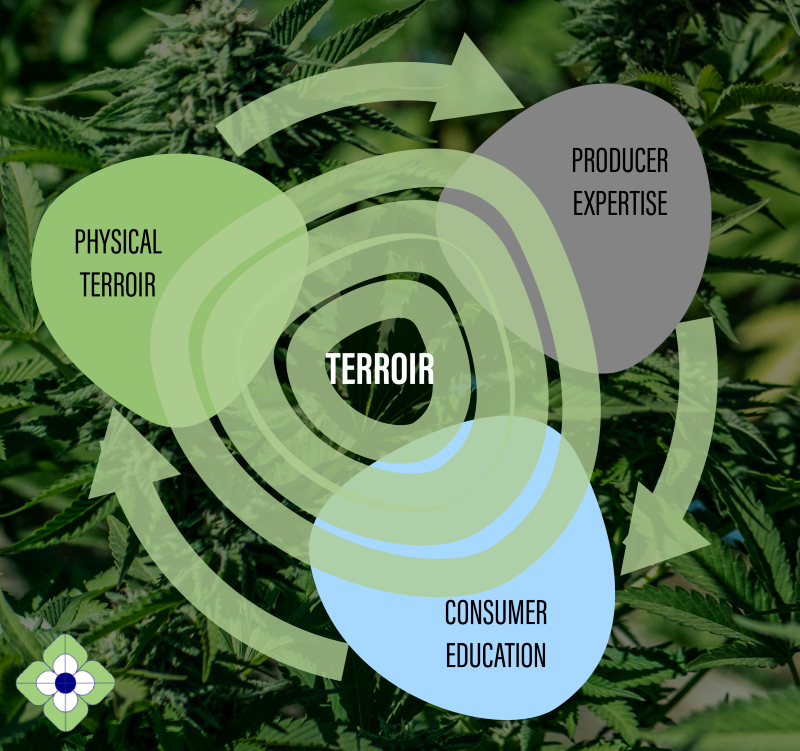
When you’re looking at cannabis appellations, you’ll sometimes hear that the quality of the flower comes almost magically out of the soil in which it’s grown. That would suggest that the physical terroir, the soil, is the one factor that defines quality. But I would argue that farmer expertise and consumer education are equally important.
When you’re looking into cannabis appellations, you’ll sometimes hear that the quality of cannabis appears almost magically out of the soil in which it grows. That would suggest that the physical terroir, the soil, is the factor that defines your flower quality.
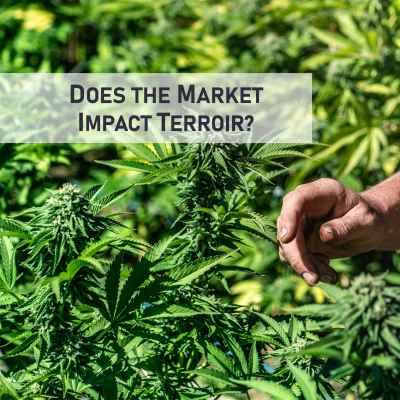
But I would argue that while yes, good cannabis is 100% physical terroir, it’s also 100% human talent (yeah, math was never my strong suit). By that I mean that it takes the talent of a producer and the talented of an educated consumer to REVEAL the terroir.
Look at Champagne: they’ve been making wine there since the middle ages. In the 17th century they developed the technique of bottling the wine before the initial fermentation had ended, and then sugar was added to create a secondary fermentation. At the same time, the English glass-makers discovered a technique to produce bottles able to withstand the internal pressure of a secondary fermentation; the Portuguese produced cork; and sulfite was developed, which helped preserve wine whose fermentation was not completed. Bubbles (or gas) in wine was considered a flaw. But in the late 17th century the English high society took to it and it grew exponentially in popularity. So champagne was born.
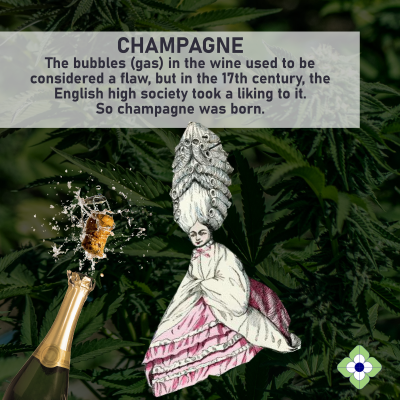
Apply that perspective to cannabis and it makes sense that consumer preferences impact what strains are grown, how they’re cultivated, and how well-oiled the supply chain is. The human element in terroir is the consumer and also, of course, the farmer. There’s a huge variety of soils and micro-climates within Humboldt.
Without consumers, you might be able to grow the best weed in the world but you’ll do it only once because you’ll have nowhere to sell it. It’s like a great concert: you need a Steinway piano, and you also need a great score, a talented musician, and an audience that vibrates to the music and inspires the musician to crush it.
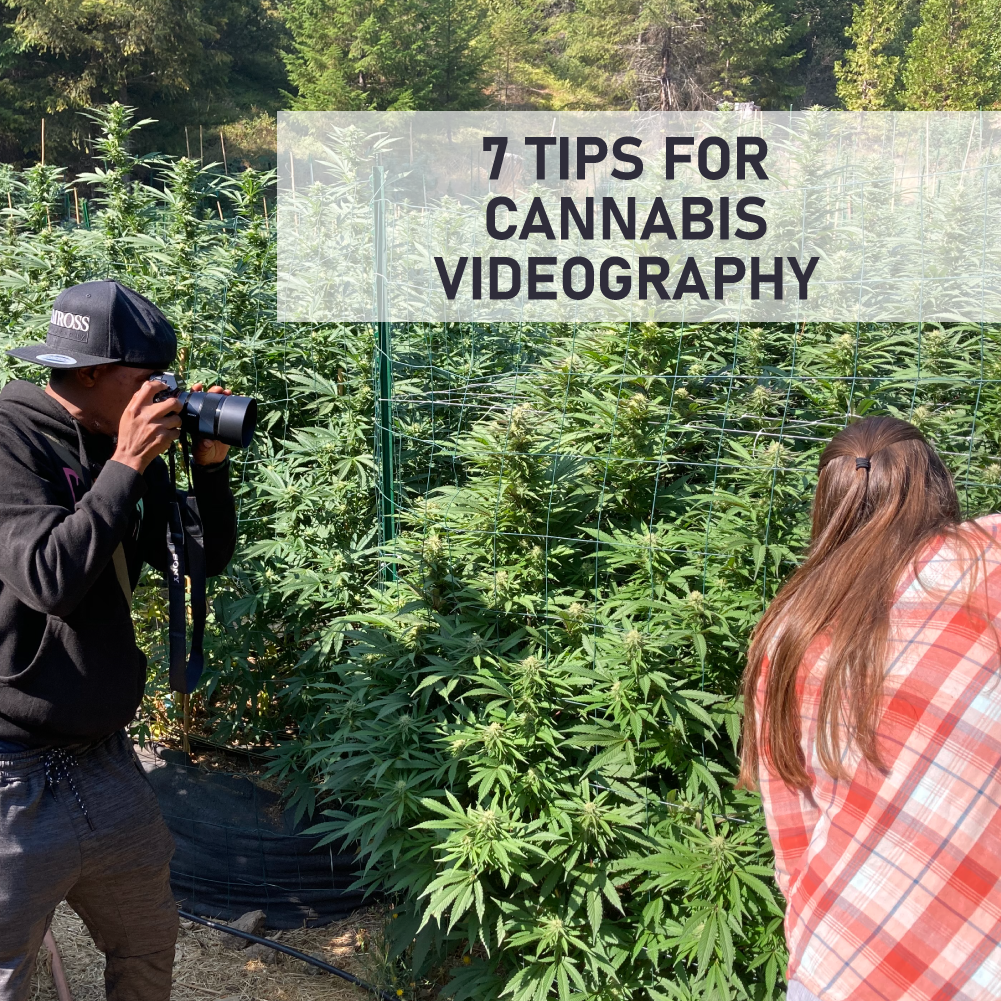
7 Tips for Cannabis Videography
You've decided to invest in a 4-minute video that introduces your brand, your farm, your product. You're choosing a videographer and you're starting to plan. Here are 7 tips to help you prepare your video shoot.
You've decided to invest in a 4-minute video that introduces your brand, your farm, your product. You're choosing a videographer and you're starting to plan. Here are 7 tips to help you prepare your video shoot.
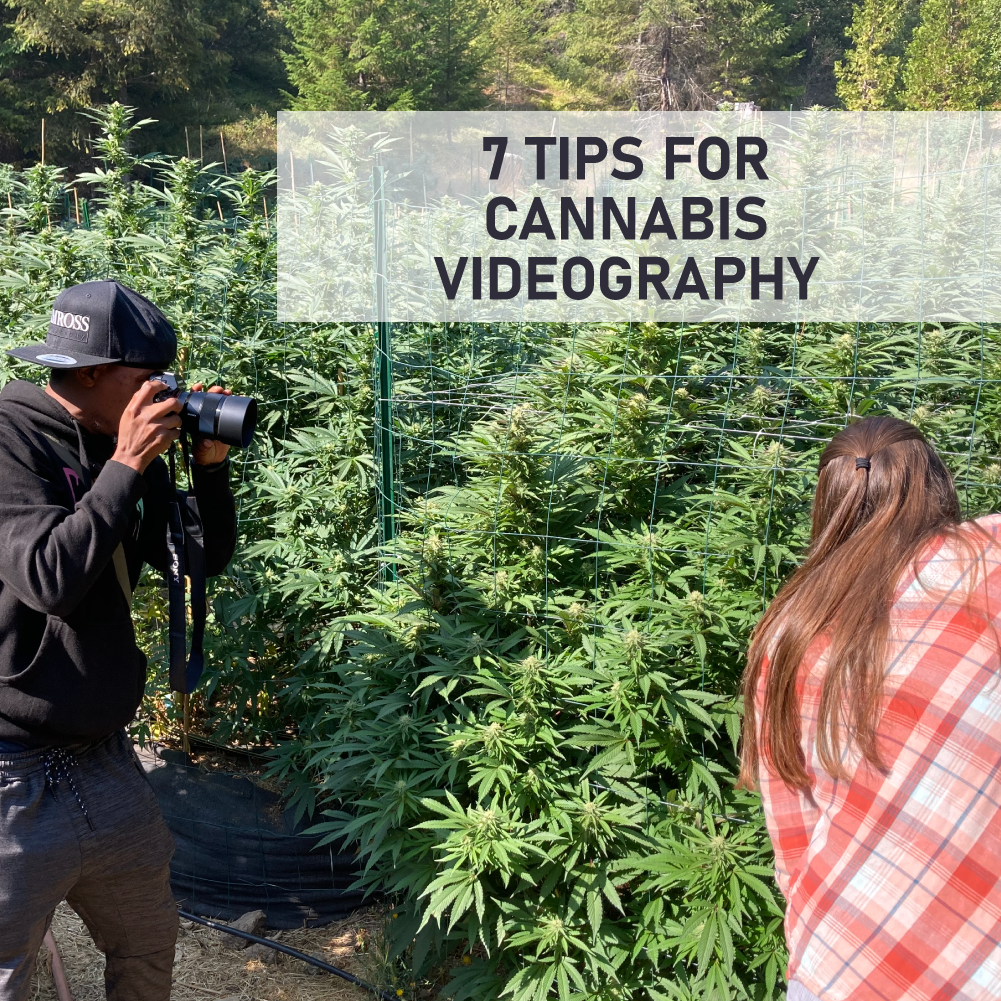
Videographer Kevin Ross with Linsey Jones at her farm, Aloha Humboldt
1. Choose your time
It’s ideal to shoot footage of the farm when the plants are more mature. There is also more activity on the farm in the summer months to film for b-roll. In terms of the time of day, it’s good to break up the shoot into 2 different parts: interviews (people talking on camera) and b-roll (footage of the farm and people doing things).
Interviews are best shot indoors so we have clean audio. But if the farm looks nice in the background and filming indoors is not possible (due to Covid-19) then filming the interview portion outdoors is fine -- ideally in the morning hours around 9am. For b-roll this can be filmed throughout the day. The videographer will need someone to guide them through the farm that day and point out the things that ideally they want to showcase on the video. It’s always good to film the interviews first so that the videographer can have a list of shots for b-roll that needs to be filmed the following day.
For manufacturing operations inside like packaging: this can be done during normal business hours. The facility manager should notify all workers on site to make sure they are OK with being filmed. Now with Covid-19 everyone is masked so it can be less of an issue if people want to hide there identity, but always good to know who does not want to be in the video so that they're not in the frame.
2. Don’t wear line patterns
For interviews: don’t wear small line patterns. Ideally no hats. No super bright neon colors. Some people are naturals at speaking on camera, others less so. Ideally, your operation has 3-4 people to be interviewed, and the videographer will mix the answers for the final video. For people working on the farm, harvesting, watering, etc, keep carrying on, the videographer is like a fly on the wall capturing the work. Just be relaxed and respond in a cool, calm manner.
3. Should anyone not be filmed?
If anyone isn’t OK to be on camera, let the videographer know before they start filming.
4. Don’t pre-write your answers
Work with the videographer to have a list of questions prior to the filming, so that you can practice your answers. But DO NOT WRITE OUT answers prior to filming. Let them come from the heart and don’t overthink it. Bullet point notes are fine to remember topics to discuss.
5. How long does it all take?
(i) Pre-planning can take a few weeks. For a June shoot, start planning in April-May.
(ii) Filming typically takes 4 days: -1 Day filming 3-4 people for all the interviews -2 Days of filming the farm -1 Day filming any other b roll of products or other shots/interviews that were missed
(iii) Post production takes 1-3 Weeks depending on how fast the client gives feedback. Satva Leung, who's done multiple videos for Talking Trees, uses Frame.io for taking in notes from the client. It’s a great way to review the video and gather feedback remotely.
6. What about music?
The videographer should have a library of music that is cleared for usage. Instrumental tracks work better in the case where we will hear people talking on camera.
7. Shoot the experience!
Don’t forget to shoot the consumption side, or to have ready footage of consumption to give to the videographer. You want to always connect with your consumers, so make sure you film the experience.
This article is co-written with videographer Satva Leung. Satva grew up in Trinidad and Arcata. He now lives in San Francisco but returns to Humboldt to be surrounded by nature and to film content for the cannabis industry. See one of his videos for Talking Trees here.